
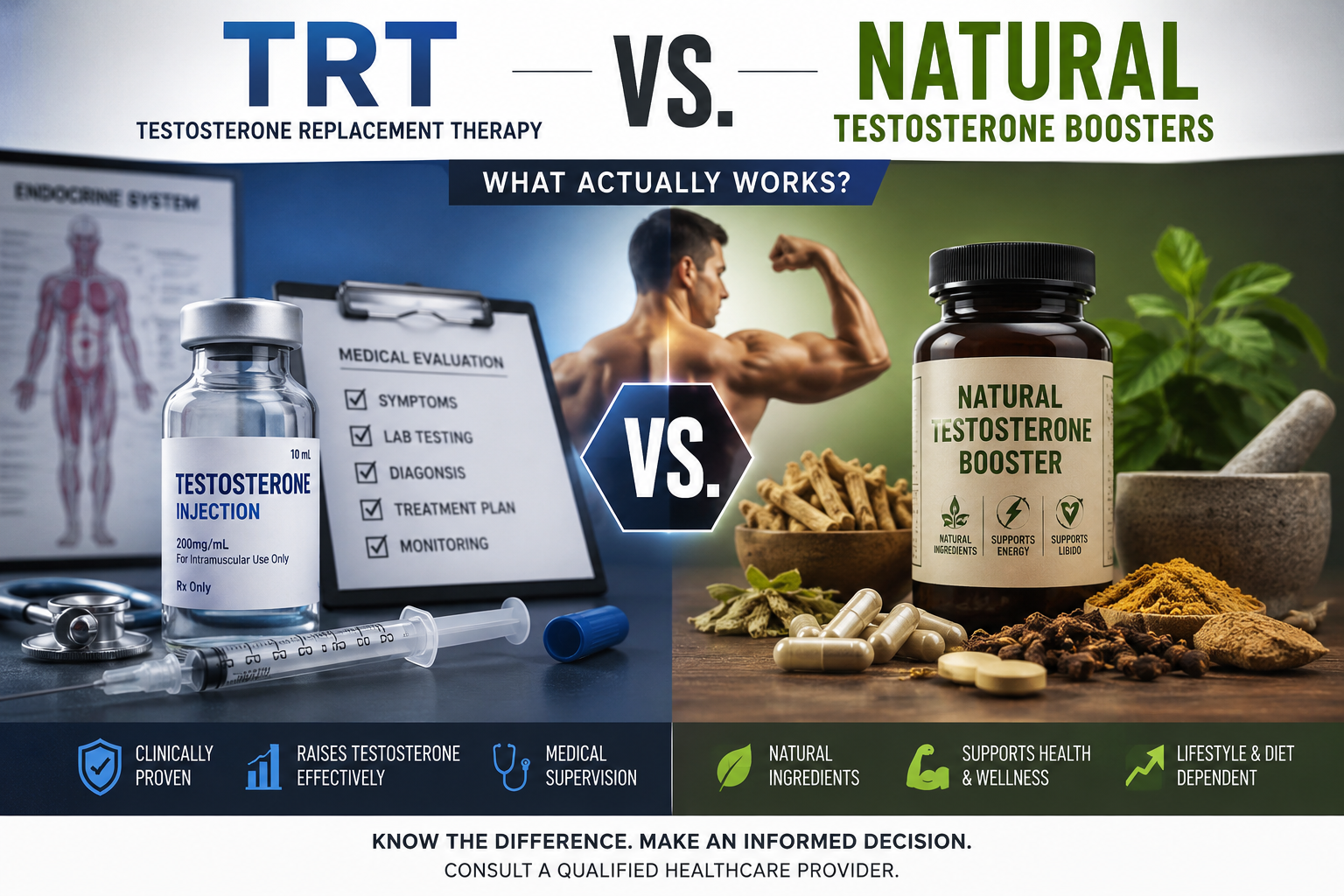
Low energy, reduced libido, declining gym performance, depressed mood, and increased body fat can make “low testosterone” feel like an obvious explanation. But symptoms alone cannot diagnose testosterone deficiency and they can overlap with poor sleep, sleep apnea, depression, thyroid disease, anemia, medication effects, metabolic disease, under-fueling, alcohol use, and chronic stress.
At Thrive Wellness Institute, the goal is not to put every symptomatic man on testosterone. The goal is to identify why symptoms are happening, confirm whether testosterone deficiency is truly present, and build a medically appropriate plan.For professional hormone evaluation and personalized treatment options, visit Thrive Wellness Institute to learn more about evidence-based testosterone and wellness care.
The Short Answer
Testosterone replacement therapy, or TRT, can reliably raise testosterone levels when a man has confirmed hypogonadism. Over-the-counter “testosterone boosters” do not replace testosterone and generally do not produce TRT-like results.
Supplements may help when they correct a real nutrient deficiency or support a lifestyle change. They should not be marketed as a substitute for evidence-based evaluation or treatment of clinically low testosterone.
TRT and Supplements Work Differently
TRT supplies prescription testosterone directly. Depending on the treatment plan, it may be delivered through injections, topical gels or creams, pellets, or other FDA-approved formulations.
Natural supplements attempt to support the bodyʼs own production through nutrients or plant compounds. Their effect depends on whether the body can produce more testosterone and whether a correctable factor—such as nutrient deficiency, inadequate sleep, high alcohol intake, obesity, medication effects, or chronic stress—is present.
That distinction matters:
- TRT can raise circulating testosterone even when natural production is impaired.
- Supplements cannot reliably overcome significant primary or secondary hypogonadism.
- Neither approach substitutes for identifying the cause of low testosterone.
When Does TRT Make Sense?
TRT is considered when a patient has both:
- Consistent symptoms or signs compatible with testosterone deficiency.
- Repeatedly low testosterone on properly timed laboratory testing.
A single low a9ernoon lab value is not enough. Current clinical guidance supports confirmation with two separate early–morning total testosterone measurements, interpreted in the context of symptoms, laboratory reference ranges, SHBG/free testosterone when indicated, and the patientʼs overall health. The AUA uses a total testosterone level below 300 ng/dL as a reasonable diagnostic cutoff, but no single number should replace clinical judgment.
For appropriately selected men with confirmed hypogonadism, TRT can improve sexual desire and may improve erectile function in some men. It can also improve anemia, bone density, lean mass, and fat mass over time. Changes in energy, mood, motivation, and cognitive symptoms are possible but less predictable and should not be guaranteed.
How Quickly Does TRT Work?
Response varies by symptom, dose, formulation, sleep quality, nutrition, training, medical conditions, and baseline testosterone level.
- Sexual interest may improve within several weeks.
- Lab levels can be reassessed a9er an appropriate interval based on formulation.
- Body-composition changes develop over months and still require progressive resistance training, adequate protein, calorie management, and recovery.
- Mood, fatigue, and concentration deserve a broader evaluation because they are influenced by many factors beyond testosterone.
TRT should be viewed as treatment for confirmed hormone deficiency—not as a shortcut around sleep, nutrition, training, mental health, or medical care.
What TRT Requires
Legitimate testosterone treatment involves ongoing medical management, not a one-time prescription.
A Thrive evaluation should include:
- Symptom review and medical history.
- Two early-morning testosterone measurements when appropriate.
- Evaluation of contributing conditions, including sleep apnea, thyroid dysfunction, anemia, metabolic disease, medication effects, and depression.
- Etiologic testing such as LH and additional endocrine studies when clinically indicated.
- Baseline hemoglobin/hematocrit, cardiovascular risk review, blood pressure assessment, and prostate-risk evaluation appropriate to age and risk profile.
- A clear discussion of fertility before starting therapy.
During treatment, clinicians monitor testosterone levels, symptoms, treatment response, blood pressure, and hematocrit. Baseline hematocrit matters because testosterone can raise red blood cell mass; a hematocrit of 54% or higher requires clinical intervention. [2] [3]
TRT and Fertility
This is one of the most important decisions in testosterone care.
Exogenous testosterone can suppress the brain-to-testicle signaling needed for sperm production. For that reason, testosterone therapy should not be used by men who are actively trying to conceive, and men who may want biological children in the future should discuss fertility preservation and alternative treatment strategies before starting. [4] [2]
If fertility is a priority, tell the Thrive clinician before labs are ordered or therapy is started.
When TRT May Not Be Appropriate
TRT is not automatically appropriate for every man with a low result or low-testosterone-like symptoms. It may need to be deferred, avoided, or coordinated with specialty care in situations such as:
- Active efforts to conceive.
- Unexplained elevated hematocrit.
- Untreated severe obstructive sleep apnea.
- Recent heart attack or stroke.
- Uncontrolled heart failure.
- Thrombophilia.
- Certain prostate or breast cancer concerns, abnormal prostate examination findings, or elevated PSA requiring further evaluation.
These are not reasons to ignore symptoms. They are reasons to evaluate carefully and choose the safest path. [5] [4]
Do Natural Testosterone Boosters Work?
Sometimes—but usually only modestly, and mainly when they address a real deficiency or lifestyle-related contributor.
The supplement industry o9en makes claims that exceed the evidence. One review of marketed “testosterone booster” products found that no data were available for 61.5% of products regarding their effect on testosterone. [6]
Supplements With a Possible Role
Vitamin D: Correcting vitamin D deficiency is important for overall health. It may support testosterone status in some deficient men, but it is not a replacement for TRT.
Zinc: Zinc deficiency can impair reproductive health and testosterone production. Supplementation may be useful when deficiency or inadequate intake is present; more zinc does not reliably raise testosterone in men who are already replete. Avoid chronic high-dose use: the adult upper limit is 40 mg/day from food and supplements combined, and excessive long-term intake can contribute to copper deficiency. [7] [8]
Ashwagandha: Some small studies suggest modest effects on testosterone or stress-related outcomes in selected populations. Results are not comparable to TRT, formulations vary, and it should not be used as treatment for confirmed hypogonadism.
D–aspartic acid, tribulus, and proprietary blends: Evidence is inconsistent or weak. Avoid products that hide doses behind proprietary blends, promise dramatic testosterone increases, or combine multiple poorly characterized ingredients.
TRT vs. Natural Strategies
| Factor | Medically supervised TRT | Lifestyle and targeted supplements |
| Primary role | Treat confirmed testosterone deficiency | Address contributors, deficiencies, and overall health |
| Effect on testosterone | Predictable increase when properly prescribed | Variable; usually modest or absent unless a deficiency/contributor is corrected |
| Best fit | Symptoms plus confirmed, persistent biochemical deficiency | Mild symptoms, poor lifestyle foundations, or documented nutrient deficiency |
| Fertility effect | Can suppress sperm production | Usually does not suppress sperm production, though supplement safety still varies |
| Monitoring | Required | Still advisable when treating a suspected deficiency |
| Main limitation | Requires long-term commitment and safety monitoring | Cannot reliably treat established hypogonadism |
The Thrive Wellness Institute Approach
At Thrive Wellness Institute, we start with data—not assumptions.
Our telehealth evaluation is designed to help determine whether symptoms are being driven by testosterone deficiency, a correctable lifestyle factor, another medical condition, or a combination of issues. Depending on the findings, your individualized plan may include:
- Comprehensive laboratory evaluation and clinical review.
- Sleep, stress, nutrition, alcohol, activity, and medication assessment.
- Targeted treatment of identified nutrient deficiencies.
- Resistance-training and body-composition support.
- Evidence-based TRT when clinically appropriate.
- Ongoing follow-up and laboratory monitoring.
- Fertility-focused planning before testosterone therapy begins.
The best outcome is not simply a higher lab value. It is a safer, sustainable improvement in symptoms, function, metabolic health, sexual health, and long-term well-being.
Frequently Asked Questions
Can natural testosterone boosters replace TRT?
No. Supplements may help correct deficiencies or support healthy habits, but they do not reliably produce the measurable testosterone increase achieved with medically supervised TRT in men with confirmed hypogonadism.
How do I know whether I need TRT?
You need a clinical evaluation and properly timed laboratory testing. Diagnosis should be based on symptoms plus consistently low testosterone on two separate early-morning measurements—not symptoms alone. [1] [2]
Is TRT safe?
TRT can be appropriate for carefully selected men when it is prescribed and monitored correctly. It also has meaningful risks, contraindications, and fertility implications. A qualified clinician should evaluate hematocrit, sleep apnea risk, cardiovascular history, prostate risk, medications, and reproductive goals before treatment. [2] [4]
Will TRT affect fertility?
It can significantly suppress sperm production. Men who are trying to conceive or may want fertility preserved should discuss this before beginning treatment. [4] [2]
Can I improve testosterone naturally while on TRT?
Yes. Sleep quality, resistance training, protein intake, body-fat management, alcohol reduction, management of sleep apnea, and correction of nutritional deficiencies support health and treatment response. They remain important whether or not TRT is used.
The Bottom Line
Natural supplements may have a role when they correct a documented deficiency or complement better sleep, training, nutrition, and stress management. They are not a replacement for TRT in men with confirmed hypogonadism.
For men with persistent symptoms and properly confirmed low testosterone, medically supervised TRT may be an appropriate option. The essential first step is a thorough evaluation and properly timed bloodwork—so treatment is based on the underlying cause, not on symptoms or supplement marketing alone.