
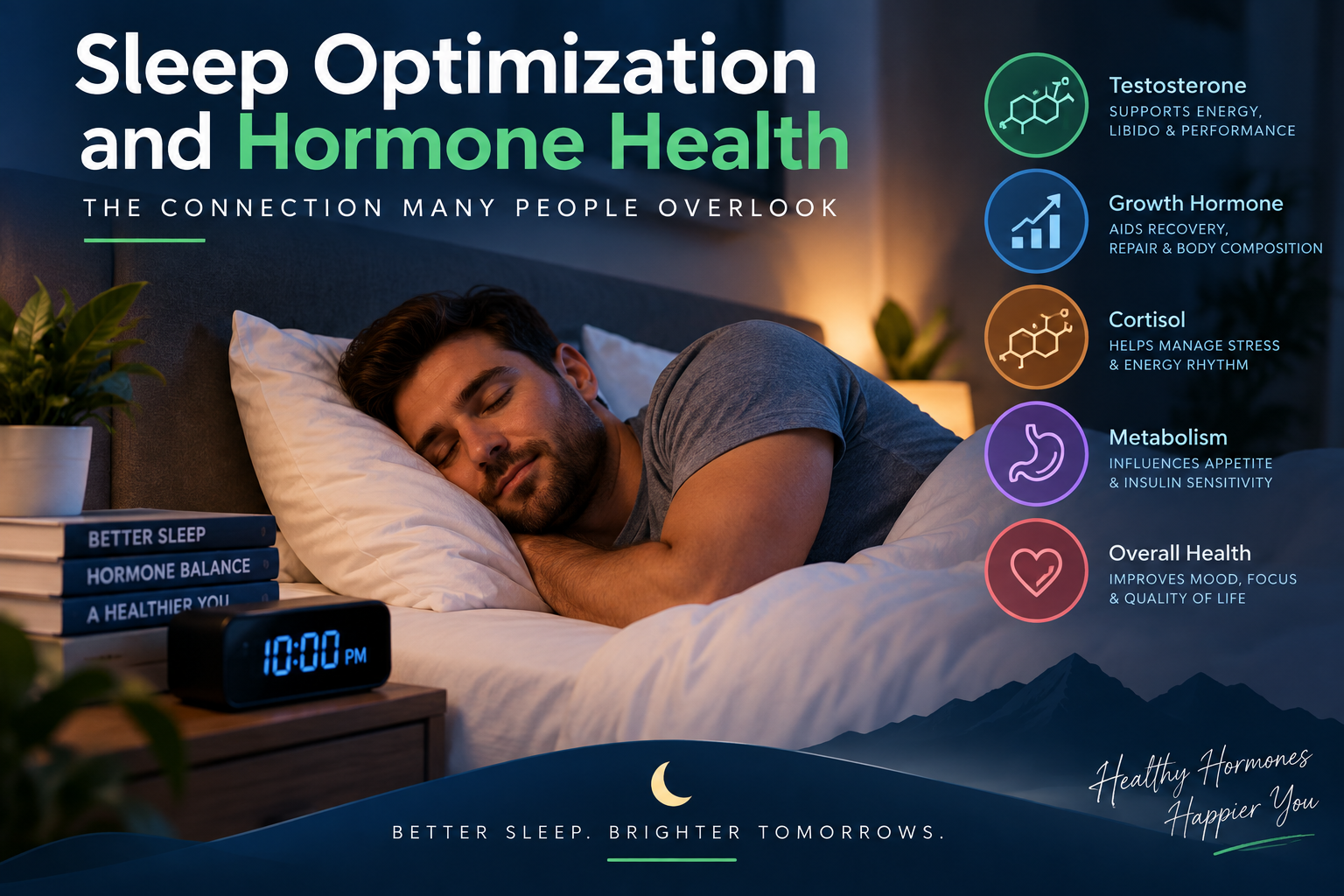
You can eat well, train consistently, and still feel like your energy, recovery, body composition, or libido is not where it should be. One commonly missed variable is sleep.
Sleep is not simply time away from work or training. It is a biologically active period that helps coordinate circadian rhythm, cortisol timing, glucose regulation, appetite signaling, recovery, and reproductive hormone function. When sleep is consistently short, fragmented, or poorly timed, the effects can show up as fatigue, cravings, stalled progress in the gym, low motivation, poor concentration, or difficulty getting the results you expected from an otherwise solid wellness plan.
At Thrive Wellness Institute, we view sleep as a foundational part of hormone and metabolic health—not an afterthought.
Why sleep matters for hormones
Several important hormone systems are regulated in part by sleep and circadian timing.
During deep, slow-wave sleep, growth hormone secretion increases substantially. In men, a large portion of sleep-related growth hormone release occurs early in the night alongside slow-wave sleep. Growth hormone is involved in tissue repair, body composition, metabolism, and recovery, which is one reason chronically disrupted sleep can affect how people feel and perform.jamanetwork+1
Testosterone is also sensitive to sleep duration and sleep quality. In a small controlled study of healthy young men, restricting sleep to five hours per night for one week reduced daytime testosterone levels by approximately 10% to 15%. That does not mean every short night causes clinically low testosterone, but it does show that sleep loss can create a meaningful hormonal signal.pmc.ncbi.nlm.nih
Cortisol follows a daily pattern. Ideally, cortisol is lower at night and rises toward morning to support alertness and energy. Chronic sleep disruption can alter that rhythm and contribute to a pattern of feeling wired at night but tired during the day. Sleep restriction has also been linked to lower testosterone, changes in cortisol signaling, and reduced insulin sensitivity.academic.oup+1
Sleep also influences metabolic and appetite regulation. Inadequate sleep is associated with insulin resistance and changes in hunger and satiety signaling. These changes may increase appetite, make dietary adherence harder, and contribute to weight gain over time particularly when poor sleep becomes chronic.academic.oup+2
The key point: sleep does not operate separately from hormone health. It is one of the systems helping set the conditions in which hormones can function normally.
The sleep–testosterone–apnea loop
Sleep and testosterone have a complicated, two-way relationship.
Poor sleep can contribute to lower testosterone levels, reduced energy, poorer recovery, and worse metabolic health. At the same time, men with obesity, insulin resistance, low testosterone symptoms, and obstructive sleep apnea frequently have overlapping concerns. The issue is rarely just one hormone or one lab value.
Obstructive sleep apnea deserves special attention. Loud snoring, witnessed pauses in breathing, gasping or choking during sleep, morning headaches, nighttime urination, resistant hypertension, and persistent daytime sleepiness are not issues to ignore. Untreated sleep apnea can fragment sleep, worsen fatigue, and impair quality of life even when someone is spending enough hours in bed.
It also matters in the context of testosterone treatment. Clinical guidance recommends avoiding initiation of testosterone therapy in men with untreated severe obstructive sleep apnea, and patients on therapy should be monitored for new or worsening sleep-disordered breathing symptoms.pmc.ncbi.nlm.nih+1
If you are pursuing hormone optimization but still wake unrefreshed, snore heavily, or feel sleepy throughout the day, a sleep-apnea evaluation may be more valuable than simply changing a dose or adding another product.
Cortisol timing matters
Cortisol is not a “bad” hormone. You need it for blood-pressure regulation, energy availability, immune function, and the normal morning transition from sleep to wakefulness.
The problem is often timing.
A healthy pattern generally includes lower cortisol overnight and a rise in the early morning. When stress, irregular sleep, alcohol, late caffeine, bright evening light, late-night work, or inconsistent sleep schedules interfere with the circadian rhythm, people may develop a pattern of being exhausted during the day but mentally activated at bedtime.
Common contributors worth auditing include:
- Inconsistent bed and wake times, especially large weekend shifts.
- Bright screens, work email, social media, or stimulating content close to bedtime.
- Caffeine later in the day, particularly in people who metabolize it slowly.
- Alcohol near bedtime, which may make sleep onset easier but can fragment the second half of the night.
- Heavy meals too close to bedtime.
- A training schedule that leaves you overstimulated, overheated, or unable to wind down.
- Chronic stress without a consistent transition from work mode to sleep mode.
CDC sleep guidance supports a consistent schedule, a quiet and cool bedroom, reduced screen exposure before bed, avoidance of large meals and alcohol near bedtime, and avoidance of afternoon or evening caffeine for people with sleep concerns.cdc
What actually improves sleep quality
The goal is not perfection. It is to build a repeatable sleep environment and circadian pattern that supports recovery.
1. Anchor your wake time
Choose a wake time you can maintain most days of the week, including weekends. A consistent wake time helps stabilize circadian rhythms and makes it easier for sleep pressure to build appropriately at night.
For most adults, regular sleep of at least seven hours is recommended for health, daytime alertness, and performance. Individual needs vary, and many adults function best in the seven- to nine-hour range.pmc.ncbi.nlm.nih+1
2. Get bright light early
Morning outdoor light can help reinforce the body’s day-night rhythm. A practical target is 10 to 30 minutes outdoors shortly after waking, adjusted for season, weather, and individual circumstances.
The purpose is not to “hack” hormones. It is to give your brain a reliable daytime signal so that wakefulness, cortisol timing, and eventual nighttime melatonin release are better aligned.
3. Protect the final hour before bed
Build a transition period. Dim the lights, reduce work-related stimulation, limit emotionally activating content, and move screens out of the bedroom when possible.
Screen exposure is not the only issue—what you are doing on the device matters too. A stressful email thread, game, financial chart, or social-media scroll can be as disruptive as the light itself.
4. Make the room cool, dark, and quiet
A cool, comfortable bedroom supports the normal nighttime decline in core body temperature that helps facilitate sleep. Many people sleep well in the mid-to-upper 60s Fahrenheit, but comfort is individual.
Prioritize practical basics:
- A dark room or eye mask.
- Consistent white noise, if environmental sound is a problem.
- Comfortable bedding.
- A temperature that feels slightly cool rather than warm.
5. Set a caffeine cutoff
Caffeine metabolism varies. A practical starting point for people struggling with sleep is to avoid caffeine after lunch or at least eight to 10 hours before planned bedtime.
If you routinely use pre-workout products, energy drinks, or afternoon coffee, assess the total stimulant load—not only the last cup of coffee.
6. Use alcohol strategically—or avoid it near bed
Alcohol can make some people feel sleepy initially, but it commonly disrupts sleep later in the night. If you wake at 2 or 3 a.m., have vivid restless sleep, or see poor overnight recovery data after drinking, alcohol timing may be part of the pattern.
7. Match training to your sleep response
Exercise is generally beneficial for sleep and metabolic health. But timing is individual.
If hard evening sessions leave you wired, elevate your body temperature late into the night, or delay sleep onset, move high-intensity training earlier when possible. Keep late-day movement easier: walking, mobility work, low-intensity cycling, or recovery-focused training.
Where hormone therapy fits
Sleep optimization does not replace appropriate medical care for true hormone deficiency, thyroid disease, menopause-related symptoms, depression, chronic pain, or other medical conditions.
Likewise, hormone therapy does not replace sleep.
For patients with confirmed hypogonadism, menopause-related symptoms, or other clinically appropriate indications, treatment decisions should be based on symptoms, medical history, physical examination when appropriate, and properly interpreted laboratory results. Sleep quality, sleep apnea risk, metabolic health, body composition, medications, alcohol intake, and stress should be part of the assessment—not treated as unrelated side issues.
At Thrive Wellness Institute, the goal is not to chase a number on a lab report. It is to identify the pattern behind the symptoms and create a plan that supports energy, recovery, body composition, sexual health, and long-term metabolic health.
A note on peptides
Peptides marketed for growth-hormone support should not be treated as a shortcut around poor sleep, untreated sleep apnea, inadequate nutrition, or an incomplete medical evaluation.
CJC-1295 and ipamorelin are sometimes discussed in wellness settings because of their relationship to growth-hormone signaling. However, these products are not FDA-approved treatments for sleep optimization or general “hormone balancing.” FDA has raised concerns about compounded CJC-1295 and ipamorelin, including potential immunogenicity, peptide impurities, characterization challenges, and—in the case of CJC-1295—reported serious adverse events such as increased heart rate and systemic vasodilatory reactions.fda+1
Any discussion of peptide-based treatment should include a clinician-led review of indication, risks, product quality, regulatory status, alternatives, and monitoring. It should never substitute for screening and treating sleep disorders.
Signs to evaluate sleep and hormones together
Consider a more complete sleep and hormone review if you have several of the following:
- You wake tired despite spending seven or more hours in bed.
- You have persistent afternoon crashes that caffeine does not meaningfully improve.
- Your libido, mood, motivation, and sleep quality are all declining together.
- You have stalled fat loss or progressive central weight gain despite consistent nutrition and training.
- You snore loudly, wake gasping, have witnessed pauses in breathing, or wake multiple times nightly.
- You are on hormone therapy but still have persistent fatigue, poor recovery, or poor sleep.
- You rely on alcohol, antihistamines, cannabis, or sedatives most nights to fall asleep.
- Your wearable data repeatedly show frequent awakenings or poor recovery, especially when symptoms match the pattern.
Wearable data can be useful for identifying trends, but it does not diagnose sleep apnea, insomnia, hypogonadism, or thyroid disease. Symptoms, history, laboratory evaluation when indicated, and formal sleep testing remain more important.
The bottom line
Sleep is not a side project. It is a foundational part of hormone signaling, metabolic function, recovery, appetite regulation, and daily performance.
If you are training hard, eating well, and still feel exhausted, do not assume the solution is another supplement, a higher dose, or a more complicated protocol. Start by asking whether your sleep duration, sleep timing, sleep quality, stress load, stimulant use, alcohol intake, or risk for sleep apnea is holding the rest of your plan back.
A targeted evaluation can help determine whether the primary issue is sleep, hormone function, metabolic health, or most commonly a combination of factors. From there, the most effective plan is one that addresses the whole picture.
This content is for educational purposes only and is not a substitute for individualized medical diagnosis or treatment. Fatigue, low libido, weight change, mood symptoms, snoring, and poor sleep can have many causes. Speak with a qualified clinician before starting, stopping, or changing hormone therapy, supplements, prescription medications, or peptide-based treatments. Seek prompt medical care for severe daytime sleepiness, witnessed breathing pauses, chest pain, palpitations, or other concerning symptoms.