
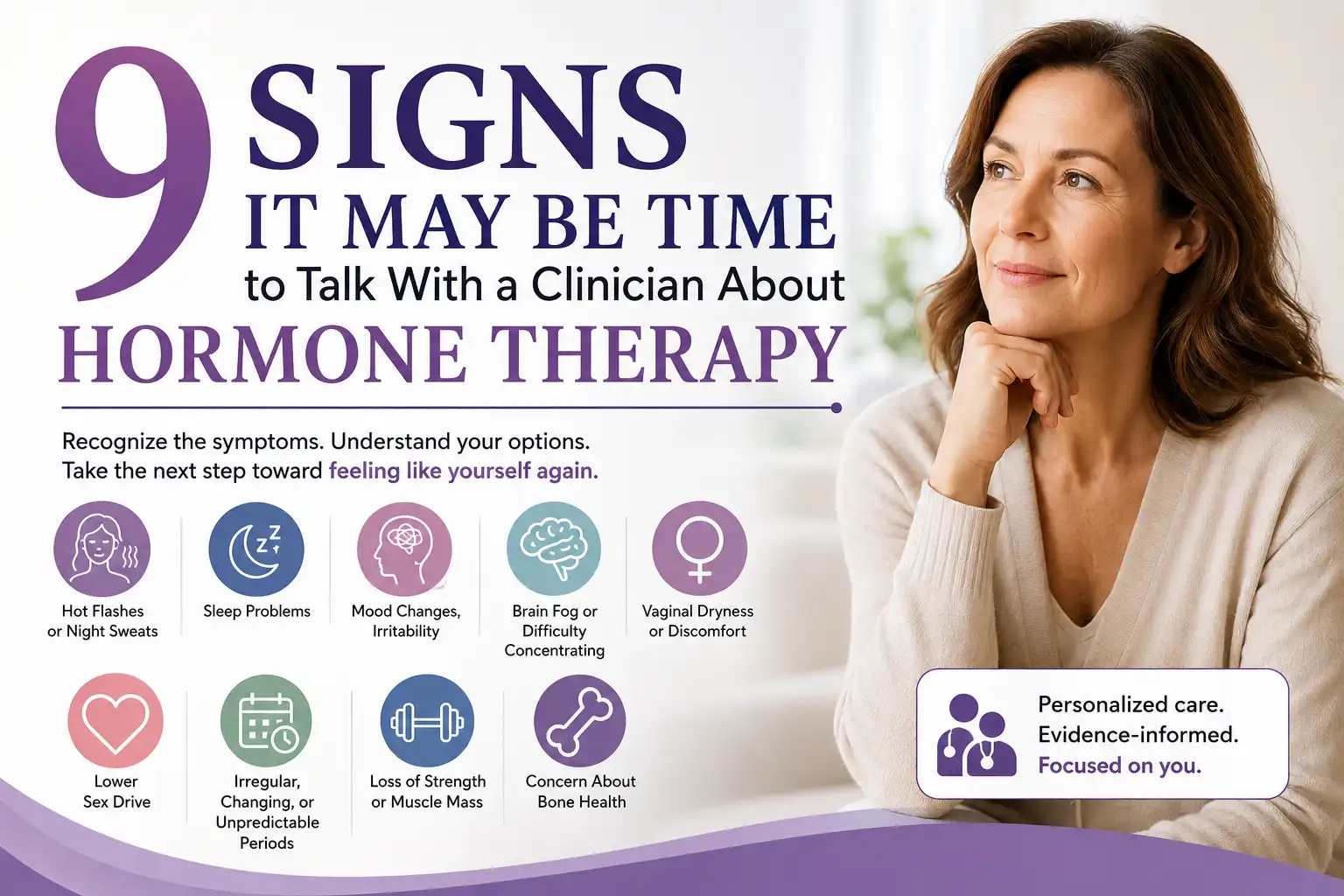
If you have been feeling more tired, foggy, irritable, or unlike yourself lately, it can be hard to know what is normal and what deserves medical attention. Many symptoms people blame on stress or aging can overlap with hormonal changes in midlife. They can also overlap with thyroid disease, anemia, sleep disorders, medication side effects, depression, and other health conditions.
That is why the right question is not, “Do I need hormones?” It is, “What is causing these symptoms, and what are my options?”
At Thrive Wellness Institute, we take a personalized approach to hormone health. That means looking at your symptoms, medical history, risk factors, and appropriate testing together rather than relying on a one-size-fits-all answer.
1) Hot flashes or night sweats
For many women in perimenopause or menopause, hot flashes and night sweats are among the clearest signs that hormonal changes may be affecting daily life. These symptoms can disrupt sleep, interfere with work, and reduce overall quality of life.
Hormone therapy is the most effective treatment for bothersome vasomotor symptoms in appropriate candidates, but it is not the only option. The best plan depends on your age, health history, severity of symptoms, and personal preferences.
2) Sleep problems that are becoming hard to ignore
Hormonal shifts can affect sleep directly, especially when night sweats, temperature changes, or mood symptoms are also present. You may be sleeping for enough hours on paper but still wake up feeling unrefreshed.
Sleep problems are common in midlife, but they should not automatically be dismissed. A clinical evaluation can help determine whether hormones, sleep apnea, anxiety, insomnia, or another condition may be contributing.
3) Mood changes, irritability, or feeling emotionally “off”
Mood symptoms can happen during the menopause transition and may include irritability, anxiety, low mood, or feeling less resilient than usual. In men, mood changes can also occur in the setting of confirmed testosterone deficiency, but symptoms alone are not enough to make the diagnosis.
Because mood changes can have many causes, it is important to avoid assuming hormones are the only explanation. A thoughtful workup helps separate hormonal symptoms from depression, anxiety, sleep disruption, medication effects, and other medical issues.
4) Brain fog or difficulty concentrating
If you find yourself forgetting details, losing focus, or feeling mentally slower than usual, you are not alone. Many patients describe “brain fog” during perimenopause and menopause.
This symptom is real, but it is also nonspecific. Hormonal changes may play a role, yet so can poor sleep, stress, thyroid disease, medication effects, and mood disorders. The goal is not to self-diagnose. The goal is to identify what is driving the change.
5) Vaginal dryness, discomfort, or pain with sex
Vaginal dryness, irritation, urinary discomfort, and pain with intercourse are common symptoms of the menopause transition. These symptoms can affect intimate relationships, exercise, sleep, and day-to-day comfort.
For some women, local vaginal estrogen or other targeted treatments may be more appropriate than systemic hormone therapy. The right treatment depends on your symptoms, anatomy, medical history, and treatment goals.
6) Lower sex drive
Low libido is common, but it is also complex. In women, sexual symptoms are often influenced by multiple factors, including hormone changes, sleep, stress, mood, relationship factors, pain with sex, and medications. In postmenopausal women with hypoactive sexual desire disorder (HSDD), testosterone may be considered in selected cases after a careful evaluation.
In men, lower sex drive can be a symptom of hypogonadism, but diagnosis requires symptoms plus consistently low morning testosterone levels on repeat testing. A low libido symptom checklist alone is not enough.
7) Irregular, changing, or unpredictable periods
Cycle changes are common in perimenopause. Periods may become closer together, farther apart, heavier, lighter, or less predictable.
At the same time, abnormal bleeding should not always be attributed to hormones alone. Heavy bleeding, prolonged bleeding, bleeding after sex, or bleeding patterns that feel significantly different deserve medical evaluation to rule out other causes.
8) Loss of strength or muscle mass
Some people notice that strength, recovery, or body composition changes with midlife hormonal shifts. In men, confirmed testosterone deficiency can contribute to reduced lean mass and strength. In women, menopause-related changes may also affect body composition over time.
Still, these symptoms are not specific to hormone deficiency. Activity level, nutrition, sleep quality, medications, and chronic illness can all play a role. That is why testing and clinical context matter.
9) Concern about bone health
Bone loss can accelerate after menopause, often without obvious symptoms. For some patients, hormone therapy is part of a broader plan to protect bone health, especially near the menopause transition. Others may need screening, exercise counseling, calcium and vitamin D optimization, or nonhormonal osteoporosis treatment.
If you have a family history of osteoporosis, a history of fracture, early menopause, or other bone risk factors, it may be time to discuss screening with your clinician.
When hormone therapy may help
Hormone therapy can be highly effective for the right patient. For many symptomatic women in perimenopause or menopause, it can reduce hot flashes and night sweats, improve sleep disruption related to vasomotor symptoms, relieve genitourinary symptoms, and help protect against early postmenopausal bone loss.
For men, testosterone therapy may help when there are compatible symptoms and confirmed testosterone deficiency. Proper diagnosis and follow-up matter because not every midlife symptom is caused by low testosterone, and not every patient is a good candidate for treatment.
What an evaluation at Thrive Wellness Institute may include
A hormone health evaluation may include:
- A detailed review of your symptoms
- Menstrual and reproductive history when relevant
- Sleep, mood, sexual health, and lifestyle review
- Medication and supplement review
- Targeted lab testing when appropriate
- Discussion of risks, benefits, and treatment options
For men being evaluated for testosterone deficiency, diagnosis should be confirmed with symptoms plus low morning testosterone on two separate tests before treatment is considered.
Why individualized care matters
There is no single hormone protocol that fits everyone. Some patients are good candidates for menopausal hormone therapy. Some may benefit from local vaginal treatment rather than systemic treatment. Some may do better with nonhormonal options. Others may need evaluation for thyroid disease, anemia, sleep apnea, depression, or another underlying cause.
What matters most is getting a careful, evidence-informed plan that fits your symptoms, goals, and health history.
When to schedule a visit
It may be time to schedule a consultation if:
- Your symptoms are affecting sleep, work, relationships, or quality of life
- You are dealing with hot flashes, night sweats, vaginal dryness, or cycle changes
- You have concerns about libido, mood, brain fog, or energy
- You want to understand whether hormones are part of the picture
- You are looking for a personalized plan instead of generic advice
Thrive Wellness Institute: A personalized approach to hormone health
At Thrive Wellness Institute, we help patients navigate perimenopause, menopause, and hormone-related symptoms with a personalized, medically grounded approach. Whether you are exploring menopausal hormone therapy, nonhormonal options, or a broader wellness plan, the first step is clarity.
Schedule a consultation with Thrive Wellness Institute to review your symptoms, discuss your options, and decide what next step makes sense for you.
Frequently Asked Questions
Is hormone therapy safe?
Hormone therapy is not one-size-fits-all. Safety depends on the type of therapy, your age, how long it has been since menopause, your symptoms, and your personal medical history. For many women who are younger than 60 or within 10 years of menopause onset and do not have contraindications, the benefit-risk balance can be favorable. A personalized review is essential.
Does hormone therapy help with weight loss?
Hormone therapy is not a weight-loss treatment. Some patients feel better able to sleep, exercise, and function when symptoms improve, but hormone therapy itself should not be marketed as a direct solution for weight loss.
Can men benefit from testosterone therapy?
Some men with confirmed hypogonadism can benefit from testosterone therapy. Diagnosis requires symptoms plus consistently low morning testosterone on repeat testing. Testosterone should not be started based on symptoms alone.
Is testosterone therapy used for women?
Testosterone is not a routine treatment for general “hormonal imbalance” in women. In selected postmenopausal women with hypoactive sexual desire disorder, it may be considered after careful assessment and counseling.
What symptoms should not be blamed on hormones alone?
Heavy or unusual bleeding, severe fatigue, chest pain, shortness of breath, major mood symptoms, and rapidly changing health symptoms should not be assumed to be hormonal without evaluation. These can have other important causes.