A Comprehensive Guide for Patients of Thrive Wellness Institute
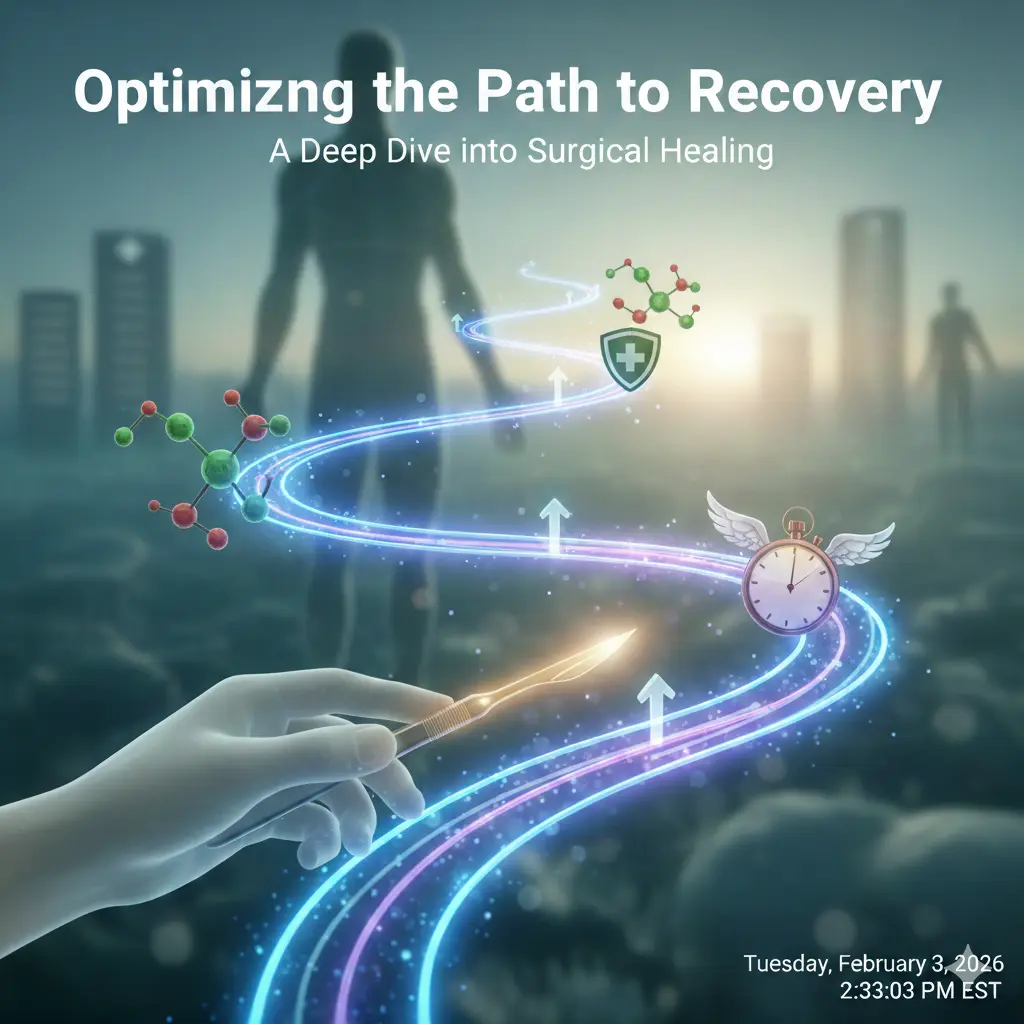
Surgery is an “ordered trauma.” While necessary, it triggers a massive biological cascade. At Thrive Wellness Institute, our goal is to move you through the painful stages of healing as quickly as possible, ensuring that your tissue doesn’t just “close,” but restores its original strength, function, and resilience.
The Metabolic Cost of Repair: Fueling the “Work Order”
Before the “repair crew” can begin, they need fuel. Major surgery can increase your Basal Metabolic Rate (BMR) by 15% to 50%. Even while resting, your body is “running a marathon” to repair tissue. If you do not provide enough raw materials, your body will cannibalize its own muscle to find the amino acids it needs.
- The Protein Priority: To maintain an “anabolic” (building) state, we recommend a goal of 0.7g to 1.0g of protein per pound of body weight daily during the first three weeks of recovery.
The 4 Stages of Your Body’s “Repair Crew”
When an incision is made, your body launches a highly programmed signaling event:
- Phase 1: Hemostasis (The “Plug” Phase): Within minutes, platelets create a clot. This isn’t just a scab; it’s a signaling hub that releases “growth factors” (like PDGF) that act as an SOS to the rest of the body.
- Phase 2: Inflammation (The “Cleanup” Phase): For the first 1–6 days, white blood cells clear out debris. The Problem: If this phase lasts too long, it creates excessive scar tissue and pain. We use peptides to “switch” the body from “cleanup mode” to “build mode” faster.
- Phase 3: Proliferation (The “Building” Phase): From day 4 to week 3, fibroblasts lay down new collagen and “Angiogenesis” (new blood vessel growth) occurs. This is where the foundation of your recovery is built.
- Phase 4: Remodeling (The “Refining” Phase): This lasts months. Your body replaces weak collagen with strong, organized fibers. Without optimization, this phase can lead to stiff, restricted scar tissue.
The Peptide Signaling Toolkit: “Master Keys” to Repair
Peptides bind to specific receptors on your cells to turn on healing pathways that might otherwise be sluggish.
- BPC-157 (The “Angiogenesis” Signal): Upregulates VEGF to grow new capillary networks. More blood flow means more oxygen reaches the “dead zone” of the surgical site. It also regulates cytokines and helps protect the GI tract from post-op medication stress.
- TB-500 / Thymosin Beta-4 (The “Cell Mover”): Uses actin sequestration to allow repair cells (fibroblasts) to crawl across the wound faster. It also downregulates pro-inflammatory cytokines like IL-1 to reduce “throbbing” pain.
- GHK-Cu (The “Architect”): Modulates enzymes (MMPs) to “prune” away messy collagen and replace it with smooth, healthy tissue. Note: Often used topically for skin aesthetics and SubQ for deep tissue remodeling.
- KPV (The “Fire Extinguisher”): Inhibits NF-κB (the “master switch” of inflammation) to rapidly reduce swelling and edema while providing antimicrobial protection.
- ARA-290 (The “Nerve Shield”): Targets the Innate Repair Receptor (IRR) to help nerves survive surgical manipulation and reduce post-op numbness or chronic nerve pain.
- CJC-1295 & Ipamorelin (The “Anabolic Engine”): Increases natural Growth Hormone pulses to activate the mTOR pathway, preventing muscle wasting and strengthening structural integrity.
The “Safety Signal”: The Vagus Nerve & HRV
Healing is a Parasympathetic (Rest & Digest) process. If your body is in a high-stress “Fight or Flight” state, it deprioritizes tissue repair.
- The Vagus Connection: BPC-157 interacts with the nitric oxide system to help modulate the vagus nerve, signaling “safety” to the brain.
- Patient Tip: Practicing daily breathwork and monitoring your Heart Rate Variability (HRV) can ensure your body is in the optimal state to receive these peptide signals.
The Gut-Wound Axis
Surgery and prophylactic antibiotics can disrupt your microbiome. Since 70% of your immune system resides in the gut, a damaged microbiome can lead to “leaky” systemic inflammation, slowing down your transition from “Cleanup” to “Building.” We recommend high-quality probiotics or colostrum during recovery to support this axis.
Synergistic Modalities (The “Environment”)
To maximize the effectiveness of your peptides, we often pair them with:
- Hyperbaric Oxygen Therapy (HBOT): BPC-157 creates the “pipes” (new blood vessels), and HBOT provides the concentrated oxygen to fill them.
- Red Light Therapy (Photobiomodulation): Specific light wavelengths stimulate the mitochondria in cells moved by TB-500, providing the ATP (energy) needed for rapid collagen synthesis.
Thrive Wellness Treatment Protocol & Therapeutic Window
| Peptide / Agent | Pre-Op (2-4 Wks) | Post-Op (Days 1-14) | Recovery (Wks 3-8) | Primary Goal |
| BPC-157 | 250mcg Daily | 500mcg Daily | 250mcg Daily | Blood flow & Angiogenesis |
| TB-500 | 2.5mg Weekly | 5mg Weekly | 2.5mg Weekly | Cell migration & motility |
| CJC / Ipamorelin | 100/200mcg Nightly | 100/200mcg Nightly | 100/200mcg Nightly | Prevent muscle loss/atrophy |
| KPV | N/A | 500mcg Daily | N/A | Reduce swelling & NF-kB |
| GHK-Cu | N/A | 2mg SubQ Daily | 2mg SubQ Daily | Scar remodeling & Collagen |
| ARA-290 | N/A | 4mg Daily | N/A | Nerve repair & pain control |
The Chronobiology of Healing: We dose CJC-1295/Ipamorelin at night to mimic the natural nocturnal pulse of Growth Hormone, which is when the majority of physical repair occurs.
Critical Supplement “Bricks and Mortar”
- Vitamin C (2,000mg): Needed for the cross-linking of collagen fibers.
- Zinc (50mg): Essential for DNA synthesis and creating millions of new repair cells.
- Arginine/Glutamine: Maintains the positive nitrogen balance needed to fuel the healing process.
- Colostrum/Probiotics: To support the “Gut-Wound Axis” and immune signaling.
Red Flags: When Healing Stalls
While these tools significantly speed up repair, watch for these signs of “stalled” healing:
- Persistent heat or redness at the site after Day 7.
- A sudden change in the color or odor of drainage.
- A plateau or regression in your range of motion/mobility.
The balance between inflammation and tissue remodeling determines recovery quality.
FAQs
How can I speed up recovery after surgery?
Optimizing recovery requires adequate protein intake, inflammation control, proper blood flow, and targeted peptide therapy to support tissue regeneration.
Do peptides help with surgical healing?
Yes, peptides like BPC-157 and TB-500 activate cellular repair pathways, improve circulation, and reduce inflammation for faster healing.
Why is protein so important after surgery?
Protein supplies essential amino acids needed to rebuild tissue, prevent muscle loss, and maintain an anabolic healing state.
Can inflammation delay surgical recovery?
Excessive or prolonged inflammation can increase pain, scarring, and delayed healing, making regulation critical for optimal recovery.
What are signs that surgical healing is delayed?
Persistent redness, swelling, unusual drainage, or reduced mobility after the first week may indicate stalled healing and should be evaluated.