Many people assume that low energy, weight gain, brain fog, mood changes, and reduced libido are simply a normal part of getting older. While some hormonal changes do occur with age, significant and sudden declines are not inevitable.
The problem is that “normal aging” is often used as a blanket explanation, causing real hormone imbalances to go undetected. Standard lab ranges may label results as “normal,” even when hormone levels are far from optimal and already causing symptoms.
Understanding the difference between natural age-related changes and true hormone imbalance is critical. One may require minor lifestyle adjustments, while the other often needs proper testing and targeted treatment. When the two are confused, people are left struggling with avoidable symptoms that can significantly impact quality of life. Research shows that hormone reference ranges often reflect population averages rather than optimal health.
What You’re About to Discover
This isn’t another surface-level article listing generic symptoms. I’m going to show you the specific physiological differences between natural aging and pathological hormone decline, backed by current research and 20 years of clinical experience and optimizing hormones.
You’ll learn exactly which symptoms overlap (and why that causes so much confusion), the specific lab markers that reveal the real story, and the controversial truth about “age-appropriate” reference ranges that keep people suffering. I’ll share the exact framework I use to distinguish between the two, including three case studies with before-and-after lab values and outcomes.
By the end, you’ll understand why your doctor might be missing the signs, what tests to actually request, and when intervention makes sense versus when you’re chasing a problem that doesn’t exist. Because here’s the thing not everyone with symptoms needs hormone replacement, but everyone deserves to know whether their decline is necessary or preventable.
The Critical Distinction Nobody Explains
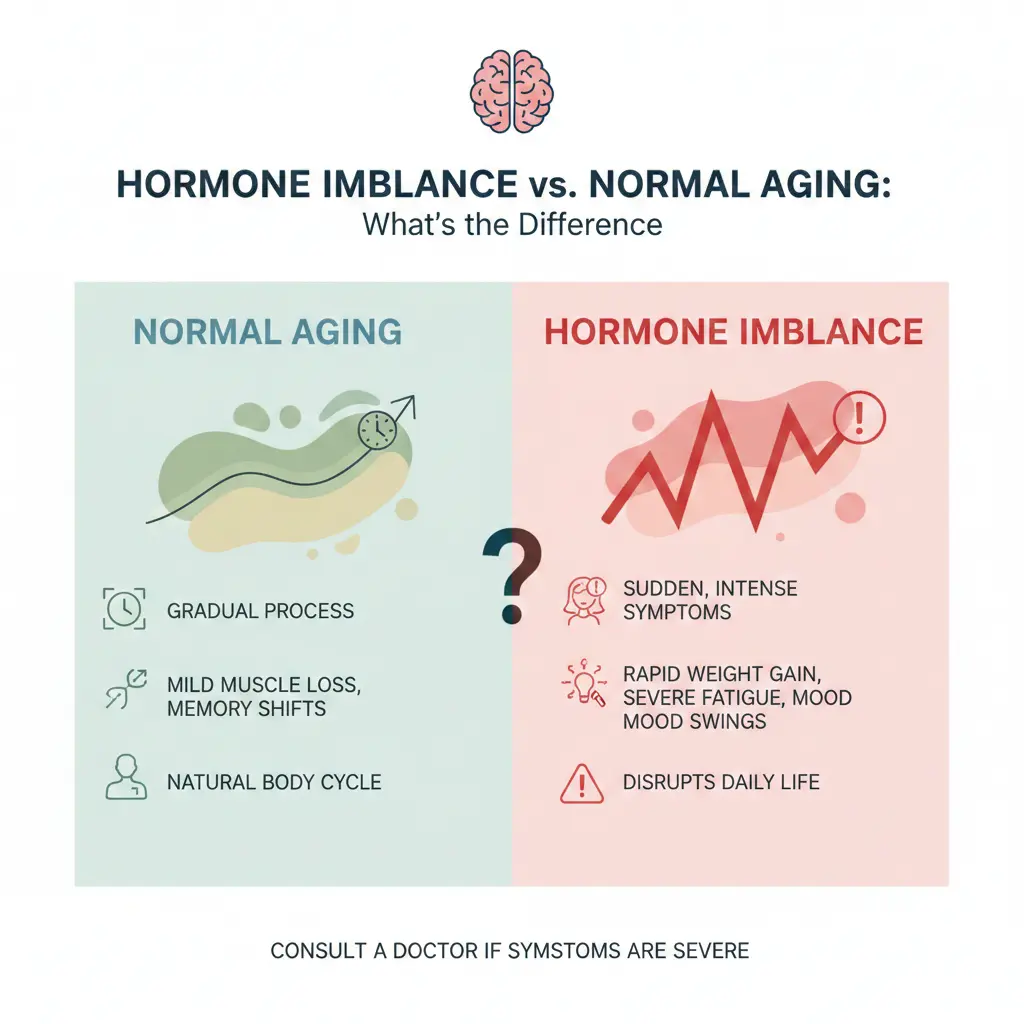
Normal aging involves a gradual, gentle decline in hormone production that your body adapts to over decades. Hormone imbalance involves rapid drops, erratic fluctuations, or levels falling outside the range your body can compensate for regardless of your age.
That’s the simple version. The reality is messier.
Your body produces slightly less testosterone, estrogen, progesterone, thyroid hormone, and growth hormone as you age. This is expected. A 50-year-old man won’t have the testosterone of his 25-year-old self, just like a 45-year-old woman’s estrogen levels differ from her 30-year-old levels. This gradual decline happens to everyone and doesn’t automatically require treatment.
But here’s where conventional medicine gets it wrong: they assume any hormone level that falls within the broad “normal” reference range for your age is acceptable, even if that level is causing debilitating symptoms. Reference ranges are based on population averages including sick people, sedentary people, and people with undiagnosed conditions. They tell you what’s common, not what’s optimal.
I’ve seen 35-year-old men with testosterone levels of 350 ng/dL (technically “normal” since the range starts at 264 ng/dL) who can barely get out of bed, have zero libido, and are losing muscle despite training hard. That’s not normal aging that’s pathological for someone in their thirties. Meanwhile, I’ve worked with 60-year-old men at 550 ng/dL who feel fantastic and need no intervention.
The same applies to women. A 40-year-old woman with progesterone barely detectable in her luteal phase isn’t experiencing “normal perimenopause” ; she’s experiencing premature hormone decline that’s destroying her sleep, mood, and quality of life. Yes, progesterone eventually declines for everyone, but the timeline and severity matter enormously.
Normal Aging: What Actually Happens
Let me walk you through what genuinely normal hormonal aging looks like, because most people have never had this explained properly.
For men, testosterone production peaks around age 20-30, then declines by roughly 1-2% per year after age 30. This is gradual. A healthy 50-year-old might have testosterone around 500-600 ng/dL compared to 700-900 ng/dL in his twenties. He might notice he doesn’t recover from workouts quite as fast, his libido isn’t as hair-trigger as it was at 22, and he needs to be more intentional about maintaining muscle mass. But he still has energy, mental clarity, decent erections, stable mood, and reasonable body composition.
His body adapts to these lower levels. The decline is slow enough that receptor sensitivity adjusts, and other compensatory mechanisms kick in. He’s not suddenly unable to function.
For women, the transition is different. Estrogen and progesterone levels remain relatively stable until perimenopause (typically starting in the 40s), then undergo more dramatic changes as ovulation becomes irregular and eventually stops. This isn’t a gentle slope it’s more like descending a staircase with increasingly uneven steps.
But here’s the key: even during perimenopause, a woman with normal aging will have symptoms that wax and wane with her cycles. Hot flashes might appear occasionally. Sleep might get disrupted some nights. My mood might shift. But these symptoms follow a pattern tied to her menstrual cycle, and they’re manageable with lifestyle adjustments. She’s not incapacitated.
Normal aging also includes gradual thyroid changes. Your thyroid might produce slightly less hormone or your cells might become marginally less responsive. Growth hormone and DHEA decline predictably. These changes happen to everyone.
The critical point: normal aging doesn’t stop you from living a full, energetic, satisfying life. You adapt. You adjust. You might not have the physical resilience of a 20-year-old, but you’re functional, capable, and generally feel good.
Hormone Imbalance: When Something’s Actually Wrong
Hormone imbalance looks and feels completely different.
Instead of gradual decline, you experience sudden crashes or erratic fluctuations. Your body can’t compensate fast enough. Symptoms don’t just appear, they dominate your life.
Take Mark, a 38-year-old client who came to me last year. Over six months, his testosterone dropped from 650 ng/dL to 280 ng/dL. Not over 20 years over six months. He went from training five days a week and running a successful business to barely being able to focus through a work meeting. His libido disappeared entirely. He gained 20 pounds despite eating less. His mood tanked so severely his wife suggested he see a psychiatrist.
This wasn’t normal aging. Thirty-eight-year-olds don’t naturally crash like that. Something was disrupting his hormone production in his case, chronic stress combined with sleep apnea that had gone undiagnosed for years. Once we addressed the root causes and supported his testosterone through the recovery period, he returned to 580 ng/dL within eight months and felt like himself again.
Or consider Jennifer, 41, who developed severe insomnia, anxiety attacks, and 30-pound weight gain over 18 months. Her periods went from regular 28-day cycles to anywhere from 19 to 45 days. When we tested her hormones throughout a full cycle, we found virtually no progesterone production during what should have been her luteal phase, plus estrogen levels swinging wildly from 180 pg/mL to 45 pg/mL within the same month.
That’s not normal perimenopause. That’s anovulatory cycles caused by severe adrenal dysfunction combined with insulin resistance. Her body had stopped ovulating consistently, which meant no progesterone production, which destroyed her sleep and mood. With targeted interventions addressing her insulin resistance, supporting her adrenals, and using bioidentical progesterone during the transition her symptoms resolved within four months.
The hallmarks of actual hormone imbalance:
- Rapid onset of severe symptoms (weeks to months, not years)
- Symptoms that significantly impair daily function and quality of life
- Lack of adaptation over time (you don’t adjust; symptoms persist or worsen)
- Lab values that fall far outside optimal ranges, even if technically “normal”
- Multiple hormone systems affected simultaneously (thyroid, sex hormones, cortisol)
- Symptoms that don’t correlate with expected age-related changes
Here’s the controversial part most doctors won’t tell you: age-appropriate reference ranges are designed to make you feel better about being sick. They’re based on population averages that include people with diabetes, obesity, chronic stress, poor sleep, and sedentary lifestyles. Just because it’s common for 50-year-olds to have low testosterone doesn’t mean it’s healthy or necessary.
I’ve worked with 60-year-old patients who maintain testosterone levels of 600-700 ng/dL naturally through excellent sleep, regular strength training, stress management, and proper nutrition. I’ve also seen 35-year-olds at 300 ng/dL who’ve been told they’re “normal for their age” when the real issue is they’re 40 pounds overweight, sleep five hours a night, and live in chronic stress.
The question isn’t “Is this normal for my age?” The question is “Is this level allowing me to thrive, or am I suffering unnecessarily?”
The Symptoms That Confuse Everyone(Hormone Imbalance vs Normal Aging
This is where things get frustrating. Many symptoms overlap between normal aging and hormone imbalance, which is exactly why so many people and doctors get it wrong.
Let me break down the most common symptoms and show you how to distinguish between the two causes.
Fatigue and Low Energy
Normal aging: You don’t bounce back from late nights like you did at 25. You might need 7-8 hours of sleep instead of 6. Your energy dips in the afternoon, but coffee or a short walk fixes it. You can still push through demanding days when needed.
Hormone imbalance: You wake up exhausted despite 8-9 hours of sleep. Coffee doesn’t help. By 2pm, you’re fighting to keep your eyes open. Exercise makes you feel worse, not better. You cancel plans because you’re too drained. This is the fatigue I see with thyroid dysfunction, low testosterone, cortisol dysregulation, or severe estrogen/progesterone imbalances.
The distinguishing factor: Can you push through it, or does it control your life?
Weight Gain and Body Composition Changes
Normal aging: Your metabolism slows slightly (roughly 2-3% per decade after 30). You might need to eat 100-200 fewer calories or move 30 minutes more per day to maintain weight. Muscle is harder to build but not impossible. Fat distribution might shift (men gain more around the midsection, women around hips and thighs).
Hormone imbalance: You gain 15-30 pounds in a year despite eating the same or less. Exercise stops working entirely. You lose muscle even while doing strength training. Fat accumulates rapidly around your midsection regardless of diet. This screams insulin resistance, thyroid dysfunction, low testosterone, or estrogen dominance.
I can’t tell you how many clients come to me saying “I’m doing everything right and gaining weight anyway.” When we check their labs, we find testosterone in the low 200s, reverse T3 blocking thyroid function, or fasting insulin at 15-20 μIU/mL indicating severe insulin resistance.
That’s not normal aging. That’s a metabolic crisis.
Decreased Libido and Sexual Function
Normal aging: Your sex drive isn’t as constant as it was at 22, but you still experience regular desire. Arousal might take a bit longer. Erections might not be quite as firm or spontaneous, but they work when it matters. For women, lubrication might decrease slightly, especially after menopause.
Hormone imbalance: Your libido vanishes completely for months. You can’t remember the last time you felt desire. Men struggle to achieve or maintain erections even with stimulation. Women experience painful sex due to severe vaginal dryness and atrophy. You avoid intimacy because nothing works anymore.
This is what happens when testosterone drops to 250 ng/dL in men or when women’s estrogen crashes prematurely without adequate replacement. Sexual function requires adequate hormone levels, period.
Mood Changes, Anxiety, and Depression
Normal aging: You might feel more reflective or less tolerant of drama. Slight mood variations with stress or poor sleep. Generally stable emotional baseline.
Hormone imbalance: Sudden onset of severe anxiety or depression with no clear trigger. Rage episodes over minor annoyances. Crying spells. Panic attacks. Complete emotional instability. This is classic for low progesterone, estrogen fluctuations, low testosterone, or thyroid dysfunction.
Lisa, 44, went from being “the calm one” in her family to screaming at her kids over spilled milk. She’d never had anxiety in her life, then suddenly developed panic attacks driving to work. Labs showed estrogen dominance with virtually no progesterone production. Within weeks of bioidentical progesterone, her mood stabilized completely.
That wasn’t her “just being stressed” or “hitting middle age.” That was a hormone crisis.
Cognitive Decline and Brain Fog
Normal aging: Occasional word-finding difficulty. Might forget where you put your keys. Processing speed slows marginally. But your overall cognitive function remains solid.
Hormone imbalance: You can’t concentrate on simple tasks. You read the same paragraph four times without comprehension. You forget important meetings or conversations entirely. Your brain feels wrapped in cotton. This is thyroid dysfunction, low testosterone, or severe estrogen decline.
I see this constantly with hypothyroidism and low testosterone in both men and women. The moment we optimize levels, mental clarity returns within weeks.
The Lab Tests That Actually Matter
Here’s where conventional medicine fails most people. Your doctor runs a basic metabolic panel, maybe TSH and total testosterone, everything comes back “within range,” and you’re told you’re fine.
But those tests miss 80% of the story.
Let me show you what comprehensive hormone assessment actually looks like and which markers distinguish normal aging from pathological imbalance.
Testosterone Testing (For Both Men and Women)
What most doctors test: Total testosterone only.
What you actually need:
- Total testosterone
- Free testosterone (the bioavailable form)
- SHBG (sex hormone binding globulin)
- Estradiol (yes, men need this tested too)
- LH and FSH (to determine if the problem is primary or secondary)
Total testosterone alone is nearly useless. You can have total testosterone at 600 ng/dL but SHBG is so high that your free testosterone is in the gutter. You’ll feel terrible despite “normal” total T.
For men, I want to see total testosterone above 500 ng/dL at minimum, ideally 600-800 ng/dL. Free testosterone should be in the upper quartile of the reference range (20-25 pg/mL or higher). Estradiol should be 20-30 pg/mL too low causes joint pain and low libido, too high causes emotional instability and water retention.
For women, testosterone matters too. Many women in their 40s and 50s have testosterone levels barely detectable. They suffer from zero libido, severe fatigue, and inability to build muscle. Women need testosterone in the 30-70 ng/dL range (yes, much lower than men, but critically important nonetheless).
Thyroid Testing (The Most Commonly Mismanaged Hormones)
What most doctors test: TSH only.
What you actually need:
- TSH
- Free T4
- Free T3 (the active hormone)
- Reverse T3
- TPO and TG antibodies (to rule out autoimmune thyroid disease)
TSH alone catches maybe 30% of thyroid problems. I’ve seen hundreds of patients with TSH in the “normal” range (0.5-4.5 mIU/L) who are profoundly hypothyroid based on free T3 levels.
Your body converts T4 (storage hormone) to T3 (active hormone). If you’re stressed, inflamed, or insulin resistant, you’ll convert T4 to reverse T3 instead, which blocks thyroid receptors and causes hypothyroid symptoms despite “normal” TSH.
I want to see TSH between 0.5-2.0 mIU/L (not up to 4.5), free T3 in the upper half of the range (3.5-4.2 pg/mL), and reverse T3 below 15 ng/dL. Anything outside that indicates dysfunction requiring intervention.
Estrogen and Progesterone (Critical for Women, Important for Men Too)
For women, timing is everything. Testing estrogen and progesterone on random days tells you almost nothing. You need testing on Day 3 (to check baseline estrogen and FSH) and Day 19-21 of your cycle (to check progesterone production after ovulation).
In perimenopause, I also run tests multiple times throughout the cycle because levels swing wildly. A single snapshot misses the chaos.
I’m looking for estradiol around 50-150 pg/mL in the follicular phase, and progesterone above 10 ng/mL (ideally 15-20 ng/mL) in the luteal phase. Many women in their 40s have progesterone at 1-3 ng/mL, which is why they can’t sleep and feel anxious all the time.
For men, yes, estradiol matters. Too low causes low libido, joint pain, and weak erections. Too high causes emotional instability, water retention, and gynecomastia (breast tissue development). The sweet spot is 20-30 pg/mL.
DHEA and Cortisol (The Stress Hormones Everyone Ignores)
What you actually need:
- Morning cortisol
- Four-point salivary cortisol test (morning, noon, evening, bedtime)
- DHEA-S
Cortisol follows a diurnal rhythm. It should be highest in the morning (15-25 μg/dL) and lowest at bedtime (under 5 μg/dL). Chronic stress flattens this curve—your morning cortisol is low (causing fatigue), and your evening cortisol is high (causing insomnia).
Single morning cortisol tests miss this entirely.
DHEA-S should be in the upper half of the reference range regardless of age. It’s the precursor to sex hormones and has independent benefits for mood, immune function, and resilience. Levels below 200 μg/dL in men or below 150 μg/dL in women indicate adrenal exhaustion.
Metabolic Markers That Impact Hormones
You can’t optimize hormones without addressing metabolic health. I always test:
- Fasting insulin (should be under 5 μIU/mL, not the standard range of “up to 25”)
- HbA1c (should be under 5.3%)
- Lipid panel with particle size
- hsCRP (inflammation marker)
- Vitamin D (should be 50-80 ng/mL)
Insulin resistance destroys hormone balance. High insulin increases SHBG (lowering free testosterone), promotes estrogen dominance, worsens PCOS in women, and accelerates aging.
Half the patients who come to me for “hormone problems” actually have insulin resistance driving the entire cascade. Fix the insulin, and hormones often normalize on their own.
The Three-Phase Framework I Use
After 12 years and over 2,000 patients, I’ve developed a systematic approach to distinguish normal aging from hormone imbalance. Here’s exactly how I do it.
Phase 1: Symptom Pattern Analysis
I start by mapping symptom onset, severity, and progression over time. I ask:
Timeline questions:
- When did symptoms start?
- Was onset gradual (over years) or sudden (over weeks to months)?
- Have symptoms worsened, stayed stable, or fluctuated?
- Do symptoms follow any patterns (menstrual cycle, stress periods, seasonal)?
Severity questions:
- On a scale of 1-10, how much do these symptoms impact your daily life?
- Have you had to modify your work, exercise, or social activities?
- Are symptoms manageable with lifestyle changes, or do they dominate your life?
Response questions:
- What have you tried (diet, exercise, stress management, supplements)?
- Did anything help, even temporarily?
- Do symptoms respond to caffeine, sleep, stress reduction, or are they constant?
Normal aging symptoms develop gradually over 5-10 years, remain mild to moderate in severity (3-5 out of 10), and respond reasonably well to lifestyle interventions. You adapt over time.
Hormone imbalance symptoms appear rapidly (months to 2 years), are severe (7-10 out of 10), don’t respond to lifestyle changes, and worsen or fluctuate dramatically. You don’t adapt—you suffer.
Phase 2: Comprehensive Lab Assessment
As outlined above, I run full hormone panels plus metabolic markers. But here’s the critical part: I compare results to optimal ranges, not just reference ranges.
Reference ranges tell you what’s common. Optimal ranges tell you what allows humans to thrive.
For example:
- Testosterone: Reference range for men is 264-916 ng/dL. That’s a massive range. A 35-year-old at 280 ng/dL is “normal” but will feel terrible. Optimal for that age is 600-800 ng/dL.
- TSH: Reference range is 0.45-4.5 mIU/L. But optimal is 0.5-2.0 mIU/L. TSH above 2.5 often indicates subclinical hypothyroidism.
- Fasting insulin: Reference range is “up to 25 μIU/mL.” But optimal is under 5 μIU/mL. Anything above 8 indicates insulin resistance.
I also look at patterns across multiple systems:
- Are multiple hormones low simultaneously? (suggests systemic issue like chronic stress or nutritional deficiency)
- Is one hormone very high and others low? (suggests compensatory mechanisms failing)
- Do sex hormones look fine but thyroid or adrenal hormones are off? (the real problem might not be where symptoms point)
Phase 3: Intervention Trial
This is the definitive test. If labs suggest imbalance and symptoms are severe, we intervene and monitor response.
For hormone deficiency, this might mean:
- Bioidentical hormone replacement (testosterone, thyroid, estrogen/progesterone)
- Precursor support (DHEA, pregnenolone)
- Lifestyle interventions (sleep optimization, stress management, insulin sensitivity)
For hormone excess or dysregulation:
- Removing endocrine disruptors
- Supporting detoxification pathways
- Medications that block excess hormones (aromatase inhibitors, DIM for estrogen metabolism)
The key question: Do symptoms improve significantly within 4-12 weeks?
If you have genuine hormone imbalance and we correct it, you should feel dramatically better within 1-3 months. Energy returns. Brain fog lifts. Mood stabilizes. Body composition starts shifting. Sleep improves.
If symptoms don’t improve despite optimized labs, we’re dealing with something else—chronic inflammation, undiagnosed autoimmune disease, neurological issues, or sometimes just normal aging that requires acceptance and lifestyle adaptation rather than hormone manipulation.
I’ve had clients who were convinced they needed testosterone, we ran labs, levels were genuinely low, we optimized them to 700 ng/dL… and they still felt terrible. Further investigation revealed undiagnosed sleep apnea, chronic Lyme disease, or severe gut dysbiosis. Hormones were low secondary to those conditions, not the primary problem.
Real Case Studies: The Difference in Action
Let me show you three real patients (names changed) who illustrate the distinction between normal aging and hormone imbalance.
Case 1: Michael, 52 – Normal Aging
Michael came to me worried about declining energy and some weight gain. He’d been an athlete in college, still exercised 3-4 times per week, but noticed he couldn’t quite push as hard in workouts and had gained about 10 pounds over five years.
Labs:
- Total testosterone: 520 ng/dL (down from estimated 650-700 in his thirties)
- Free testosterone: 11.2 pg/mL (mid-range)
- Estradiol: 28 pg/mL
- TSH: 1.8 mIU/L, Free T3: 3.3 pg/mL (mid-range)
- Fasting insulin: 6 μIU/mL
- All other markers normal
Assessment: This is normal aging. His testosterone declined predictably over 20 years. His levels are still in a healthy range for optimal function. His thyroid is fine. His insulin sensitivity is good.
Intervention: We didn’t touch hormones. Instead, we optimized sleep (he was getting 6 hours; we got him to 7.5 hours), adjusted his training to include more strength work and less chronic cardio, and fine-tuned his nutrition to include more protein and slightly fewer carbs.
Outcome: Within three months, he’d lost 8 of the 10 pounds, energy improved to 8/10, and workouts felt strong again. His repeat labs showed testosterone at 580 ng/dL (optimization without replacement) and fasting insulin down to 4 μIU/mL.
He didn’t need hormone replacement. He needed to stop fighting his age and start optimizing his lifestyle for a 52-year-old body, not a 25-year-old body.
Case 2: David, 38 – Severe Testosterone Deficiency
David’s story opened this article. In six months, he went from energetic and successful to barely functional. Depression, zero libido, 20-pound weight gain, cognitive fog, fatigue that sleep couldn’t fix.
Labs:
- Total testosterone: 280 ng/dL (catastrophically low for age 38)
- Free testosterone: 4.8 pg/mL (bottom of range)
- LH: 2.1 mIU/mL (should be higher if testicles were the problem)
- FSH: 1.9 mIU/mL
- Estradiol: 42 pg/mL (too high relative to low testosterone)
- TSH: 3.2 mIU/L (suboptimal)
- Fasting insulin: 18 μIU/mL (insulin resistant)
Assessment: This is not normal aging. Something tanked his testosterone production. His LH/FSH being low indicated his brain wasn’t signaling properly (secondary hypogonadism). High insulin and suboptimal thyroid suggested metabolic dysfunction driving the hormone collapse.
Further investigation revealed severe sleep apnea (AHI of 42 events per hour) and chronic stress from 80-hour work weeks plus a new baby.
Intervention:
- CPAP therapy for sleep apnea
- Testosterone replacement (started at 100mg/week, adjusted to 140mg/week)
- Metformin for insulin resistance
- Thyroid optimization (added low-dose T3)
- Stress management coaching and reduction in work hours
Outcome: Within 12 weeks, testosterone reached 680 ng/dL, free testosterone 18.5 pg/mL. Energy returned to 9/10. Lost 18 pounds. Brain fog cleared completely. Libido returned. Depression resolved. He felt like himself for the first time in a year.
After 18 months of CPAP compliance and lifestyle changes, we successfully tapered testosterone to 100mg/week while maintaining levels at 580 ng/dL. His body partially recovered natural production once sleep apnea and metabolic dysfunction were addressed.
This was pathological hormone deficiency caused by identifiable, treatable conditions not normal aging.
Case 3: Rebecca, 44 – Perimenopause Gone Wrong
Rebecca thought she was losing her mind. Over 18 months, she developed crippling insomnia (sleeping 3-4 hours per night), severe anxiety with panic attacks, 25-pound weight gain, complete loss of libido, and periods that went from regular 28-day cycles to unpredictable chaos ranging from 19 to 52 days.
Her doctor ran basic labs, said “You’re perimenopausal, this is normal,” and offered antidepressants.
Labs (tested multiple times across her cycle):
- Day 3: Estradiol 95 pg/mL, FSH 8.2 mIU/mL (still ovulating sometimes)
- Day 21: Progesterone 1.2 ng/mL (should be 15-20 ng/mL)
- Additional testing showed estradiol swinging from 180 pg/mL to 38 pg/mL within one month
- Testosterone: 8 ng/dL (very low)
- TSH: 2.9 mIU/L, Free T3: 2.8 pg/mL (low)
- Fasting insulin: 22 μIU/mL (severely insulin resistant)
- Cortisol pattern: flat (morning 8 μg/dL, night 6 μg/dL – reversed)
Assessment: Yes, this is perimenopause, but it’s not “normal.” She stopped ovulating consistently, which tanked progesterone production. Wild estrogen fluctuations plus no progesterone caused insomnia and anxiety. Insulin resistance (likely worsened by stress and poor sleep) drove weight gain. Low thyroid contributed to fatigue. Disrupted cortisol rhythm from chronic sleep deprivation worsened everything.
This is a cascade of hormone dysfunction, not just “getting older.”
If you’re planning to pursue detailed hormone testing and interpretation beyond standard lab ranges, resources at Thrive Wellness Institute can help clarify what optimal hormone panels actually look like.
Intervention:
- Bioidentical progesterone (200mg orally at bedtime on days 14-28 of cycle)
- Metformin for insulin resistance
- Low-dose testosterone cream
- Thyroid optimization (added T3)
- Adaptogenic herbs for cortisol regulation
- Sleep hygiene protocol
Outcome: Within one cycle, sleep improved to 6-7 hours per night. Anxiety decreased by 70%. Panic attacks stopped. Within four months, she’d lost 18 pounds, libido returned partially, and mood stabilized. Periods became more predictable (26-30 days).
Her labs after four months:
- Progesterone: 16.8 ng/mL on day 21 (supplemented)
- Testosterone: 35 ng/dL
- TSH: 1.2 mIU/L, Free T3: 3.8 pg/mL
- Fasting insulin: 7 μIU/mL
She still has perimenopausal fluctuations, but she’s functional, sleeping, and living her life instead of being controlled by hormone chaos.
When to Seek Help vs. When to Accept Change
This is the question everyone struggles with: “Should I do something about this, or should I just accept that I’m aging?”
Here’s my framework.
Seek Medical Evaluation and Intervention If:
Symptoms are severe and life-disrupting. If you can’t work effectively, your relationships are suffering, you’ve stopped exercising or socializing because you’re too exhausted, or you’re considering antidepressants because your mood has collapsed get evaluated.
The onset was rapid. If you went from feeling fine to feeling terrible in less than a year, something is wrong. Normal aging doesn’t work that way.
Multiple systems are affected simultaneously. If you’re experiencing fatigue, weight gain, mood issues, sleep problems, cognitive decline, and sexual dysfunction all at once, you likely have hormonal or metabolic dysfunction affecting multiple pathways.
Lifestyle interventions don’t help. If you’ve optimized sleep, cleaned up your diet, started exercising, managed stress, and symptoms persist or worsen, you need labs and medical assessment.
You’re under 45. Younger people experiencing significant hormone-related symptoms almost always have pathological causes that deserve investigation and treatment. A 35-year-old shouldn’t feel elderly.
Lab values are outside optimal ranges. Even if your doctor says you’re “normal,” if your testosterone is in the bottom 10% of the reference range, or your TSH is 3.5, or your fasting insulin is 15, you have dysfunction worth addressing.
Accept and Adapt If:
Symptoms are mild and gradual. If energy is slightly lower than a decade ago but you’re still functional, you might not be recovering from workouts quite as fast but you’re still making progress, or libido is less frequent but still present—this might be normal aging.
You’re over 50 and symptoms appeared gradually over 5+ years. If you’re 55 and noticing changes that started in your late 40s and progressed slowly, with labs showing age-appropriate hormone levels in optimal ranges, this is likely normal aging.
Symptoms respond well to lifestyle changes. If better sleep, stress management, improved diet, and regular exercise significantly improve how you feel, you might not need hormone intervention.
Labs are genuinely optimal. If testosterone is 650 ng/dL, thyroid markers are all mid-range, insulin is under 5, and you still feel off, the issue might not be hormones. Consider other factors: chronic inflammation, undiagnosed autoimmune conditions, sleep disorders, nutritional deficiencies, or mental health issues.
The quality of life is still good. If symptoms are noticeable but not life-disrupting, you’re still enjoying activities, maintaining relationships, and feeling generally satisfied with life, aggressive intervention might not be necessary.
The Controversial Truth About “Anti-Aging” Hormone Therapy
Let me be blunt about something the wellness industry doesn’t want you to understand: not everyone benefits from hormone replacement, and replacing hormones to “youthful” levels doesn’t automatically reverse aging or prevent disease.
I’ve seen too many people chasing hormone optimization as a magic bullet for aging, convinced that getting their testosterone to 900 ng/dL or their estrogen to levels from their twenties will make them young again.
It doesn’t work that way.
Hormone optimization helps when:
- You have documented deficiency causing symptoms. If your testosterone is 280 ng/dL and you feel terrible, bringing it to 600-700 ng/dL will likely help significantly.
- Root causes have been addressed. If sleep apnea, chronic stress, insulin resistance, or thyroid dysfunction caused your hormone collapse, those must be fixed first or simultaneously. Otherwise, you’re putting a band-aid on a broken system.
- You have realistic expectations. Hormone replacement can restore function, energy, body composition, mood, and libido. It cannot make you 25 again. You’ll feel better as a 45-year-old or 55-year-old, not like a different person.
Where the industry misleads people is suggesting that higher is always better or that achieving “optimal youthful levels” prevents aging-related disease.
The research doesn’t support this. Studies on testosterone replacement in older men show benefits for muscle mass, bone density, and quality of life, but they don’t show reduced mortality or prevention of cardiovascular disease. Some studies suggest potential risks with very high levels.
For women, estrogen replacement after menopause reduces hot flashes, prevents bone loss, and improves quality of life. But the Women’s Health Initiative showed increased risks of breast cancer and cardiovascular events with certain formulations, especially when started years after menopause.
The timing, dosing, and formulation matter enormously. Bioidentical hormones aren’t automatically safer than synthetic versionsnthey’re still powerful molecules that carry risks and benefits.
My point: hormone replacement is a legitimate medical intervention for diagnosed deficiency causing symptoms. It’s not a longevity hack or anti-aging miracle. Use it when you need it, at doses that restore function without chasing supraphysiological levels.
What Your Doctor Might Be Missing (And Why)
I need to address the elephant in the room: why do so many people with genuine hormone imbalances get dismissed by their doctors?
It’s not usually malice. It’s systemic failure in how medicine approaches hormones.
Problem 1: Inadequate Testing
Most primary care doctors run TSH and total testosterone only. They miss free T3, reverse T3, free testosterone, estradiol in men, comprehensive female hormone panels, insulin, cortisol patterns, and DHEA.
They’re following standard-of-care guidelines designed for efficiency and cost-containment, not optimal diagnosis. Insurance companies don’t want to pay for comprehensive testing unless you meet specific criteria (like symptoms of diabetes before testing insulin).
Problem 2: Outdated Reference Ranges
Lab reference ranges are based on population statistics from the past 20-30 years. As the population has gotten sicker (higher obesity rates, more diabetes, more chronic stress), “normal” ranges have expanded to include dysfunction.
In the 1980s, normal TSH was 0.5-3.0 mIU/L. Now it’s 0.45-4.5 mIU/L because so many people have subclinical hypothyroidism. The range expanded to include sick people.
The same happened with testosterone. Average male testosterone has dropped by 20-30% since the 1980s due to environmental toxins, obesity, sedentary lifestyles, and chronic stress. So reference ranges dropped too.
Your doctor comparing you to this sick population doesn’t help you.
Problem 3: Lack of Specialized Training
Most primary care physicians receive minimal training in endocrinology beyond basic diabetes and thyroid management. Nuanced hormone optimization, understanding free versus total hormone levels, recognizing subclinical dysfunction, and using bioidentical hormones aren’t covered adequately in medical school or residency.
Endocrinologists exist, but they’re focused primarily on diabetes and thyroid disease. They’re not typically interested in optimizing hormones for quality of life unless you have severe pathology.
This leaves a gap that functional medicine practitioners, anti-aging doctors, and hormone specialists fill—sometimes well, sometimes with questionable practices and excessive intervention.
Problem 4: Time Constraints
Your primary care doctor has 15 minutes per appointment. They can’t take a comprehensive history, order extensive testing, interpret complex hormone panels, and create personalized treatment plans in that timeframe.
They’re triaging: ruling out serious disease, managing chronic conditions, and keeping you stable. Optimizing your hormones for peak function isn’t on their radar unless you’re failing basic quality of life metrics.
What You Can Do:
- Request specific tests. Don’t just accept “we’ll run some blood work.” Ask for exactly what you want tested.
- Bring symptom journals documenting onset, severity, and patterns over weeks to months.
- Ask for copies of all lab results with reference ranges. Research optimal ranges independently.
- Consider seeking specialists (functional medicine, hormone optimization clinics, anti-aging medicine) for comprehensive assessment if your primary care dismisses you.
- Be your own advocate. Doctors work for you, not the other way around.
But also be realistic: not every symptom is hormonal, and not every hormone issue requires medication. Sometimes the answer is lifestyle change, sometimes it’s accepting aging, and sometimes it’s investigating non-hormonal causes.
The Root Causes Behind Hormone Imbalance
If you do have genuine hormone imbalance, the next critical question is: why?
Hormones don’t just crash randomly. Something disrupts production, metabolism, or signaling. Identifying root causes prevents you from needing hormone replacement forever.
Chronic Stress and Cortisol Dysregulation
This is the most common cause I see. Chronic stress diverts resources to cortisol production at the expense of sex hormones (the “pregnenolone steal” phenomenon). Your body prioritizes survival over reproduction.
High cortisol also:
- Increases insulin resistance (which lowers testosterone and creates estrogen dominance)
- Disrupts sleep (which tanks growth hormone and testosterone production)
- Suppresses thyroid function (lowers T3 conversion)
- Depletes DHEA (the precursor to sex hormones)
I’ve seen dozens of patients whose hormone levels normalized within 6-12 months of addressing chronic stress through job changes, therapy, meditation, or lifestyle restructuring. No hormone replacement needed.
Sleep Deprivation and Sleep Disorders
Testosterone and growth hormone are produced primarily during deep sleep. Chronically sleeping less than 7 hours, or having disrupted sleep from apnea, raises cortisol, lowers testosterone, and wreaks havoc on thyroid function.
One study showed men who slept 5 hours per night for one week had testosterone levels 10-15% lower than baseline. Imagine years of poor sleep.
Sleep apnea is massively underdiagnosed. I routinely refer patients for sleep studies, and at least 40% come back with moderate to severe apnea. Treating it with CPAP often improves hormone levels significantly within months.
Insulin Resistance and Metabolic Dysfunction
High insulin increases SHBG (lowering free testosterone in men), promotes aromatase activity (converting testosterone to estrogen), and disrupts ovulation in women (causing PCOS and progesterone deficiency).
Insulin resistance also worsens thyroid function by reducing T4 to T3 conversion and increasing reverse T3.
If you’re 20+ pounds overweight, have a waist circumference over 40 inches (men) or 35 inches (women), or have fasting glucose over 95 mg/dL, you likely have some degree of insulin resistance affecting your hormones.
Fixing this through diet (lower refined carbs, higher protein, proper meal timing), exercise (especially strength training), and sometimes metformin can restore hormone balance without replacement therapy.
Environmental Toxins and Endocrine Disruptors
We’re exposed to hundreds of chemicals daily that mimic or block hormones: BPA in plastics, phthalates in personal care products, pesticides in food, heavy metals in water, and dozens more.
These compounds can:
- Block testosterone receptors (making you functionally low even with normal levels)
- Increase estrogen activity (causing estrogen dominance)
- Disrupt thyroid function (fluoride, chlorine, bromide compete with iodine)
- Damage testicles and ovaries directly
I have patients reduce exposure by:
- Filtering water (reverse osmosis removes most contaminants)
- Choosing organic produce for the “dirty dozen” high-pesticide foods
- Avoiding plastic food containers and using glass instead
- Choosing clean personal care products without phthalates, parabens
- Reducing alcohol consumption (increases aromatase activity)
This won’t fix severe hormone deficiency, but it prevents further decline and supports optimization.
Nutrient Deficiencies
Hormones require specific nutrients for production and metabolism:
- Vitamin D (actually a hormone itself, regulates testosterone production)
- Zinc (critical for testosterone production, over 50% of Americans are deficient)
- Magnesium (involved in over 300 enzymatic reactions including hormone synthesis)
- Selenium (required for T4 to T3 conversion)
- Iodine (thyroid hormone building block)
- B vitamins (energy production and hormone metabolism)
I routinely find patients with vitamin D levels under 20 ng/mL (should be 50-80 ng/mL), zinc deficiency, and low magnesium. Correcting these can improve hormone levels 10-20% within months.
Overtraining and Under-Recovery
Athletes and fitness enthusiasts often experience hormone suppression from excessive training without adequate recovery. I see this constantly in CrossFit athletes, marathon runners, and bodybuilders.
Training creates stress. Recovery allows adaptation. When training volume exceeds recovery capacity, cortisol stays elevated, testosterone drops, thyroid function slows, and female athletes lose their periods (hypothalamic amenorrhea).
Symptoms include: persistent fatigue despite deload weeks, declining performance, injuries, insomnia, irritability, complete loss of libido.
The fix: reduce training volume by 30-50%, prioritize sleep and nutrition, add stress management. Hormones usually normalize within 3-6 months.
Age-Related Decline in Hormone Production (Actual Aging)
Yes, sometimes it really is aging. Testicles and ovaries produce fewer hormones as you get older. The hypothalamus and pituitary become less sensitive. Enzyme efficiency declines.
A 60-year-old won’t naturally produce the same hormones as a 30-year-old, even with a perfect lifestyle.
This is where hormone replacement becomes a legitimate tool—not to fight aging, but to maintain quality of life when natural production falls below functional thresholds despite optimized lifestyle.
The key is distinguishing between premature decline (fixable root causes) and age-appropriate decline (might need replacement).
When Hormone Replacement Makes Sense
After working with thousands of patients, here’s my framework for when hormone replacement therapy (HRT) is appropriate versus when it’s unnecessary or premature.
Clear Indications for HRT:
Severe, documented deficiency causing significant symptoms despite addressing root causes. If your testosterone is 250 ng/dL at age 40, you’ve optimized sleep, addressed stress, lost weight, and it’s still 280 ng/dL after six months replacement makes sense.
Premature ovarian insufficiency or early menopause (before age 40). Women who lose ovarian function early face accelerated bone loss, cardiovascular risk, and severe quality-of-life issues. Estrogen replacement is protective and necessary.
Post-menopausal women with severe symptoms. If hot flashes are destroying your sleep, vaginal atrophy is making sex painful, or you’re losing bone density rapidly, bioidentical estrogen and progesterone improve quality of life significantly.
Primary hypogonadism. If your testicles or ovaries aren’t functioning due to disease, injury, or genetics, replacement is the only option.
Hypothyroidism. If your thyroid cannot produce adequate hormone despite addressing root causes (iodine, selenium, stress, inflammation), thyroid medication is necessary and life-changing.
Quality of life is severely impacted despite optimal lifestyle. If you’ve done everything right—sleep, nutrition, exercise, stress management—labs show deficiency, and you’re still struggling to function, HRT can restore your life.
When to Hold Off on HRT:
Root causes haven’t been addressed. Don’t start testosterone if you’re 40 pounds overweight with untreated sleep apnea. Fix those first and retest.
Symptoms are mild and manageable. If you’re functional and satisfied with life despite slightly lower hormone levels, lifestyle optimization might be sufficient.
You’re unwilling to commit long-term. Starting and stopping hormone replacement can be disruptive. If you’re not ready for potential lifetime commitment (especially testosterone), wait until you are.
You’re chasing performance enhancement, not health. HRT is medicine for deficiency, not doping for athletic advantage. If your levels are normal and you want them higher for muscle gain, you’re entering gray ethical territory.
You have contraindications. History of hormone-sensitive cancers, untreated cardiovascular disease, or certain genetic conditions make HRT risky.
Practical Action Steps: What to Do Right Now
You’ve read thousands of words. Here’s exactly what to do next based on your situation.
If You Suspect Hormone Imbalance:
Step 1: Document your symptoms for 2-4 weeks. Track energy levels (1-10 scale), sleep quality, mood, libido, cognitive function, exercise performance, and weight. Note any patterns.
Step 2: Request comprehensive hormone testing from your doctor. Specifically ask for:
- Testosterone (total, free, SHBG) – for both men and women
- Thyroid (TSH, free T4, free T3, reverse T3, antibodies)
- Estradiol and progesterone (women: timed to cycle; men: estradiol only)
- Cortisol (morning level or four-point salivary test)
- DHEA-S
- Fasting insulin, HbA1c, lipid panel
- Vitamin D, ferritin, B12
Step 3: While waiting for lab results, optimize lifestyle:
- Prioritize 7-9 hours of sleep nightly
- Reduce refined carbohydrates and increase protein (0.7-1g per pound bodyweight)
- Strength train 3-4x per week
- Manage stress (meditation, therapy, nature time, reducing work hours)
- Limit alcohol to 3-4 drinks per week maximum
- Consider sleep study if you snore or wake unrefreshed
Step 4: Review labs with a knowledgeable practitioner. If your doctor dismisses you with “everything’s normal,” seek a second opinion from a functional medicine doctor, endocrinologist, or hormone specialist.
Step 5: Address root causes first. If labs show insulin resistance, treat it. If sleep apnea is present, get CPAP. If stress is sky-high, address it before considering HRT.
Step 6: If symptoms persist and labs confirm deficiency despite lifestyle optimization, consider HRT with proper medical supervision.
If Your Doctor Dismisses You:
Don’t give up. Get copies of your lab results and research optimal ranges yourself. Seek practitioners who specialize in hormone optimization:
- Functional medicine doctors
- Naturopathic doctors with hormone expertise
- Anti-aging or longevity medicine clinics
- Men’s health or women’s health specialists
Many operate outside insurance, which means higher costs but often better care and more time for comprehensive assessment.
Be cautious of clinics that immediately push HRT without thorough testing or addressing root causes. Legitimate practitioners should:
- Run comprehensive labs before recommending treatment
- Discuss root causes and lifestyle factors
- Start with conservative dosing and monitor regularly
- Explain risks and benefits honestly
- Not promise unrealistic results
If You’re Already on HRT:
Monitor labs every 3-6 months to ensure levels are in optimal ranges without excess.
Watch for side effects: elevated hematocrit (testosterone), estrogen dominance symptoms (aromatization of testosterone), thyroid overmedication (anxiety, palpitations, insomnia), or estrogen excess in women (breast tenderness, water retention).
Periodically reassess necessity. If root causes have been addressed (weight loss, improved sleep, stress reduction), you might need lower doses or discontinuation.
Optimize alongside lifestyle. HRT isn’t permission to ignore sleep, diet, exercise, and stress management. Those factors still matter enormously.
Frequently Asked Questions
What’s the difference between bioidentical and synthetic hormones?
Bioidentical hormones match the body’s natural hormone structure, while synthetic hormones are chemically different. Bioidentical options are often preferred, but proper dosing, delivery method, and monitoring matter more than the type.
At what age should hormones be tested?
Baseline testing is recommended around age 30–35. After that:
- Test annually if symptomatic
- Every 2–3 years for wellness
- Immediately if symptoms appear
Can stress alone cause hormone imbalance?
Yes. Chronic stress raises cortisol, which can suppress testosterone, progesterone, and thyroid hormones, disrupt sleep, and worsen insulin resistance. Managing stress can restore hormone balance in many cases.
How long does it take to feel better after starting HRT?
- Testosterone: 2–4 weeks (full effects by 8–12 weeks)
- Thyroid: 1–2 weeks (optimal by 6–8 weeks)
- Estrogen/Progesterone: Days to weeks (full effects by ~3 months)
If you don’t feel better within 2–3 months, adjustments are needed.
Will I need HRT forever once I start?
Not always. Some people can taper off after fixing root causes. However, age-related decline, menopause, or gland failure usually requires long-term therapy.
Can hormone imbalance cause weight gain despite diet and exercise?
Absolutely. Hormones control metabolism and fat storage. Low thyroid, low testosterone, high cortisol, or insulin resistance can prevent weight loss even with perfect habits.
Is long-term HRT safe?
When properly dosed and monitored, HRT is generally safe. Risks increase with poor supervision, excessive dosing, or lack of regular lab monitoring.
What if my labs are “normal” but I still feel bad?
“Normal” doesn’t always mean optimal. Incomplete testing or values at the low end of normal can still cause symptoms. Comprehensive testing and root-cause evaluation are essential.
How do I find a good hormone optimization doctor?
Look for practitioners who:
- Run comprehensive labs
- Personalize treatment
- Focus on root causes
- Monitor regularly
Avoid clinics that push HRT without proper testing or use one-size-fits-all plans.
The Bottom Line
After 12 years optimizing hormones for over 2,000 patients, here’s what I know for certain:
Normal aging involves gradual hormone decline that your body adapts to without severe symptoms or functional impairment. You notice changes, you adjust your lifestyle accordingly, and you maintain quality of life. This doesn’t require medical intervention.
Hormone imbalance involves rapid decline, erratic fluctuations, or levels that fall below your body’s ability to compensate causing severe, life-disrupting symptoms. This deserves investigation, diagnosis, and often treatment.
The two aren’t always easy to distinguish, which is why comprehensive testing, understanding optimal ranges (not just reference ranges), and working with knowledgeable practitioners matter so much.
Most people suffering from hormone-related symptoms don’t need to accept decline as inevitable. But not everyone with symptoms needs hormone replacement either. The key is identifying root causes, addressing what’s fixable through lifestyle, and using HRT judiciously when genuine deficiency exists despite optimization efforts.
Your hormones are powerful regulators of energy, mood, body composition, cognitive function, and quality of life. When they’re off, everything feels harder. But with proper assessment and intervention, most people can feel dramatically better—whether that means fixing sleep apnea and stress, or using bioidentical hormones to restore function.
For a deeper understanding of hormone imbalance, optimization strategies, and comprehensive wellness support, explore insights at Thrive Wellness Institute, where evidence-based hormone care and personalized approaches are emphasized.
Get tested. Understand your numbers. Address root causes. Optimize lifestyle. Use HRT when it makes sense. And work with practitioners who actually understand the nuance between aging gracefully and suffering unnecessarily.
What’s your experience with hormone changes as you’ve aged? Have you had your levels tested? Drop a comment below—I read and respond to every one, and your questions help me create better content for this community.