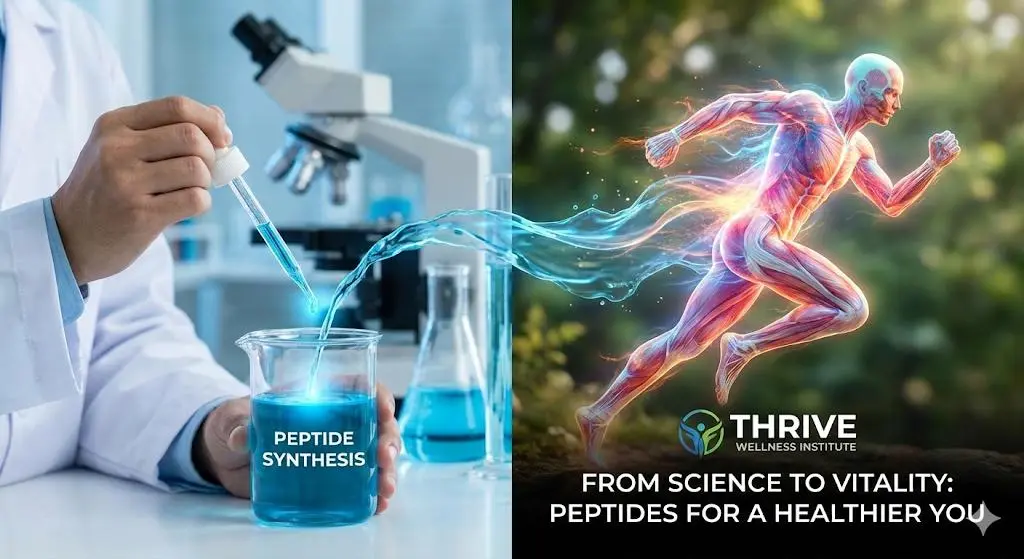
Peptide therapy is rapidly becoming one of the most promising advancements in modern functional, metabolic, and regenerative medicine. As research accelerates, peptides are now recognized as precision biological messengers capable of influencing nearly every major physiological system energy metabolism, immunity, tissue repair, cognition, hormonal balance, and cellular aging.
At Thrive Wellness Institute, r mission is to harness the highest-quality, medically validated peptide formulations to help patients achieve their peak healthspannot just a longer life, but a better one.
I. Peptide Fundamentals: The Body’s Biological Messengers
Peptides are short chains of amino acids typically 2 to 50 units long linked by peptide (amide) bonds. Their unique size is what makes them so powerful:
- Smaller than full proteins → can cross cellular membranes
- More complex than single amino acids → can deliver targeted biological instructions
- Highly specific in receptor binding → fewer side effects
- Highly potent → require extremely low doses
In the human body, peptides are responsible for some of the most essential processes, including:
✔ Immune function
✔ Tissue repair
✔ Hormonal regulation
✔ Appetite control
✔ Inflammation management
✔ Neurological signaling
✔ Sleep regulation
✔ Metabolic balance
As we age or undergo chronic stress, many of these peptide signaling pathways weaken. Peptide therapy works by replacing, restoring, or enhancing these natural biological signals, allowing the body to heal, regulate, and perform at a higher level than before.
II. Targeted Applications in Disease Management & Regenerative Healing
Unlike traditional medications that often suppress symptoms, peptides work at the root cause level, improving cell communication and activating natural healing processes.
A. Injury Repair and Anti-Inflammation (BPC-157)
One of the most studied therapeutic peptides, BPC-157, originates from proteins found in human gastric juices. It is renowned for its regenerative, protective, and anti-inflammatory mechanisms.
Mechanisms of Action
- Stimulates angiogenesis, boosting blood flow to damaged tissues
- Promotes the formation of growth factor receptors, accelerating cell repair
- Enhances fibroblast and collagen production, essential for connective tissue recovery
- Protects the gut lining and reduces systemic inflammation
Clinical Benefits
- Rapid healing of tendons, ligaments, muscles, bone, and nerves
- Accelerated recovery from tears, sprains, fractures
- Reduction in inflammatory bowel conditions (IBS, Crohn’s, Ulcerative Colitis)
- Effective repair of intestinal permeability (“leaky gut”)
- Decreased systemic inflammation markers
Because BPC-157 influences multiple repair pathways at once, it has become a foundation therapy for athletes, chronic pain patients, and individuals with inflammatory disorders.
B. Immune Modulation & Immune Resilience (Thymosin Alpha-1)
Thymosin Alpha-1 (Tα1) is a thymic peptide responsible for regulating adaptive immunity. As humans age, thymic function declines, weakening our ability to fight infections.
Mechanisms of Action
- Boosts T-cell maturation and activation
- Enhances natural killer (NK) cell function
- Helps immune cells detect and eliminate abnormal or infected cells
- Improves immune surveillance and resilience
Clinical Uses
- Chronic or recurrent infections
- Immune dysfunction
- Autoimmune conditions
- Immune strengthening in aging adults
- Pre- and post-operative immune optimization
With immune dysregulation on the rise globally, Tα1 has become a critical peptide for strengthening foundational immune response.
III. Metabolic Optimization, Fat Loss, and Hormonal Signaling
One of the most transformative uses of peptide therapy is in weight management, fat loss, metabolic correction, and hormonal balance.
A. Growth Hormone Releasing Peptides (GHRPs & GHS)
Growth hormone levels naturally decline with age a process called somatopause. This leads to fat accumulation, decreased energy, slower recovery, and muscle loss.
Gold-Standard Combination: CJC-1295 + Ipamorelin
These peptides work synergistically:
- CJC-1295 → long-acting stimulus to the pituitary for steady GH release
- Ipamorelin → amplifies GH pulse frequency + blocks somatostatin (the GH inhibitor)
Key Benefits
- Accelerated fat burning (lipolysis)
- Increased lean muscle and improved physical performance
- Faster recovery from training or injury
- Enhanced deep-stage sleep cycles
- Boosted vitality and hormonal balance
- Improved skin elasticity and collagen repair
This therapy restores natural GH rhythm rather than artificially replacing it, making it far safer and physiologically aligned.
B. Gut-Brain Metabolic Axis Optimization (Incretin Peptides)
Incretin agonists mimic powerful gut hormones that regulate appetite, insulin response, cravings, and fat metabolism.
GLP-1 & GIP Agonists (Semaglutide, Tirzepatide)
These peptides:
- Reduce cravings
- Enhance fullness (satiety)
- Slow gastric emptying
- Improve insulin sensitivity
- Lower blood glucose
- Promote consistent fat loss
The Triple Pathway Innovation: Retatrutide
Retatrutide is the newest and most potent incretin therapy, targeting three metabolic pathways simultaneously:
- GLP-1
- GIP
- Glucagon receptor agonism
Metabolic Effects
- Maximal appetite suppression
- Superior glucose control
- Direct stimulation of fat oxidation
- Increased energy expenditure
- Possible improvement in metabolic flexibility
Retatrutide represents the most comprehensive metabolic peptide intervention currently available.
IV. Peptides for Longevity, Mitochondrial Health & Cognitive Enhancement
Peptides are also driving major innovations in anti-aging and cognitive optimization.
A. Cellular Energy & Mitochondrial Optimization (MOTS-c)
MOTS-c is a rare mitochondrial-encoded peptide that acts as an exercise mimetic, improving energy utilization.
Mechanisms
- Enhances glucose uptake into muscle cells
- Improves insulin sensitivity
- Increases ATP production
- Boosts metabolic flexibility
Longevity Benefits
- Supports healthy aging
- Reduces metabolic diseases
- Improves physical stamina
- Supports mitochondrial resilience
B. Neuroprotection & Cognitive Enhancement
Dihexa
A peptide shown to be dramatically more potent than BDNF for:
- Enhancing memory
- Supporting learning
- Promoting synaptic connections
- Improving cognitive clarity and focus
Cerebrolysin
A powerful neuropeptide blend used for:
- Stroke recovery
- Traumatic brain injury repair
- Neuroprotection
- Improving neuroplasticity and cellular regeneration
V. Safety, Precision Dosing, and Medical Supervision
Because peptides directly influence biological signaling pathways, professional oversight is essential.
Administration
Most peptides are administered:
- Subcutaneously (under the skin)
- Occasionally intramuscularly
- Topically or intranasally (depending on molecular design)
Oral peptides are rare because digestive enzymes break them down before absorption.
Medical Oversight at Thrive Wellness Institute
Every treatment protocol begins with:
- Comprehensive metabolic and hormonal testing
- Advanced blood chemistry analysis
- Full health and lifestyle assessment
- Precision-based dosing customized to goals, biology, and medical history
This ensures that peptides work with your body not against it.
Conclusion: The Future of Physiological Restoration
Peptide therapy represents a major leap forward in modern medicine. Instead of masking symptoms, peptides restore the body’s natural communication pathways leading to true healing, enhanced vitality, sharper cognition, improved longevity, and optimized metabolic function.
Whether you’re seeking to:
- Accelerate recovery
- Reduce inflammation
- Lose stubborn fat
- Improve immunity
- Boost energy
- Slow aging
- Enhance cognitive clarity
Peptide therapy offers one of the most promising, science-backed solutions available today.
FAQs
1. What is peptide therapy and how does it work?
Peptide therapy uses short chains of amino acids to support natural biological functions such as healing, fat loss, immune strength, sleep, and hormone balance. These peptides act like signals that tell the body to repair, regenerate, or optimize specific systems.
2. Are peptides safe to use
Most clinically studied peptides are considered safe when used properly and under professional guidance. They are naturally occurring in the body, but dosage, quality, and sourcing matter a lot.
3. Which peptides are best for fat loss?
Popular fat-loss peptides include GHS (Growth Hormone Secretagogues) such as CJC-1295, Ipamorelin, and newer multi-agonists like Retatrutide. These help boost metabolism, improve energy, and increase fat burning.
4. How long does it take to see results from peptide therapy?
Results vary depending on the goal.
- Fat loss & metabolism: 4–8 weeks
- Healing & recovery: 2–4 weeks
- Anti-aging & longevity: 8–12 weeks
Consistent use + lifestyle factors affect outcomes.
5. Do peptides help with muscle gain?
Yes. Some peptides help increase growth hormone release, improve protein synthesis, and speed up recovery all of which support muscle growth and performance.
6. Can peptide therapy boost immunity?
Certain peptides like Thymosin Alpha-1 (TA-1) are known for enhancing immune response, reducing inflammation, and improving the body’s defense mechanisms.
7. What are the side effects of peptide therapy?
Mild side effects may include:
- Temporary injection-site redness
- Fatigue
- Headache
- Nausea
These effects are generally rare and depend on dosage and peptide type.
8. Is peptide therapy suitable for weight loss only?
No. Peptides support many wellness goals, including:
- Longevity
- Better sleep
- Faster healing
- Improved skin health
- Hormone balance
- Increased energy and metabolism
9. Can peptides help with anti-aging?
Yes. Several peptides support collagen production, improve skin elasticity, enhance cellular repair, and slow age-related decline making them a popular natural anti-aging option.
10. Do you need a prescription for peptide therapy?
It depends on your country and peptide type. Many therapeutic peptides require professional supervision to ensure correct dosing and safety.