
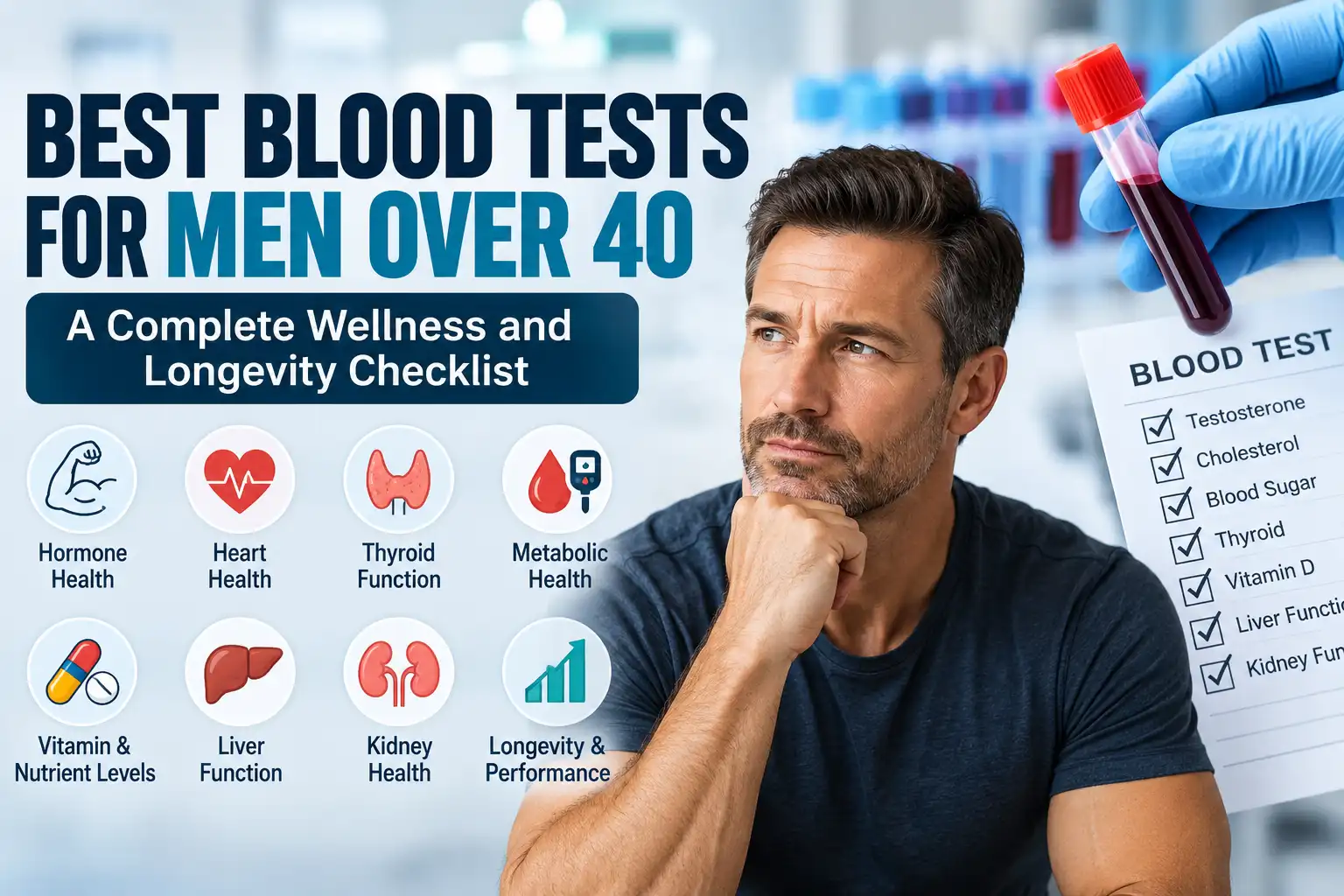
Most men get blood work only after they feel unwell, gain weight, lose energy, have trouble sleeping, or receive a reminder for an annual physical. By then, the earliest warning signs may have been present for years.
A wellness-focused lab evaluation takes a different approach: establish a baseline, identify trends early, and use objective data to guide decisions before small changes become bigger problems. Think of labs as a GPS. Before deciding where to go with nutrition, exercise, weight loss, hormone optimization, peptides, supplements, or medication, it helps to know exactly where you are starting.
Routine screening guidelines are essential, but they are designed as a population-level minimum. They may not include every marker that is useful for a person who values performance, longevity, body composition, recovery, metabolic health, and proactive risk reduction. A thoughtful annual laboratory review can fill that gap—without blindly ordering every available test.
Why Lab Testing Matters
Symptoms such as fatigue, poor recovery, low motivation, disrupted sleep, weight gain, reduced libido, brain fog, anxiety, mood changes, or declining exercise capacity are real—but they are not specific.
The same symptom can come from many different causes:
- Low testosterone, high or low estradiol, elevated SHBG, sleep apnea, medication effects, or chronic illness.
- Prediabetes, insulin resistance, thyroid dysfunction, under-fueling, alcohol use, or loss of muscle mass.
- Iron deficiency, anemia, low B12, chronic inflammation, kidney or liver disease, or poor sleep.
- Depression, anxiety, overtraining, inadequate recovery, infection, pain, or major life stress.
Symptoms tell us where to look. Labs help clarify what is actually happening.
A comprehensive lab review can help a clinician:
- Establish a personal baseline before starting hormone therapy, peptide therapy, supplements, or major lifestyle interventions.
- Identify cardiometabolic risk before it presents as overt diabetes, cardiovascular disease, fatty liver disease, or chronic kidney disease.
- Differentiate likely hormone, thyroid, metabolic, inflammatory, nutrient, and organ-function contributors to symptoms.
- Avoid treating the wrong problem with the wrong intervention.
- Monitor safety when using therapies that can affect red blood cells, liver enzymes, kidney markers, lipids, glucose, estradiol, or other hormones.
- Track whether an intervention is producing measurable improvement—not just a short-lived change in how someone feels.
Lab data does not replace clinical judgment, a detailed history, examination, sleep assessment, nutrition review, or mental-health screening. It adds objective information to the whole picture.
At Thrive Wellness Institute, the goal is not to chase “perfect” numbers or diagnose disease from one borderline result. The goal is to build a personal health dashboard: understand baseline physiology, identify modifiable risk, follow meaningful trends, and create a plan that matches the individual.
The Annual Foundation Panel
For men over 40, the following tests provide a practical annual wellness baseline. Some are appropriate for nearly everyone; others should be selected based on symptoms, medications, body composition, family history, and prior results.
| Test | What it evaluates | Why it matters |
|---|---|---|
| CBC | Red blood cells, hemoglobin, hematocrit, white blood cells, platelets | Helps identify anemia patterns, elevated hematocrit, white-cell changes, platelet abnormalities, and safety issues before or during hormone therapy. |
| CMP | Kidney function, liver enzymes, electrolytes, calcium, protein, bilirubin, glucose | Tracks kidney and liver trends, hydration-related changes, glucose, and metabolic or medication-related effects. |
| Lipid panel | LDL-C, HDL-C, triglycerides, total cholesterol | Provides foundational cardiovascular-risk information. |
| ApoB | Atherogenic particle number | Can clarify cardiovascular risk when LDL-C does not fully reflect the metabolic picture, especially with high triglycerides, insulin resistance, diabetes, obesity, or metabolic syndrome. |
| Lp(a) | Inherited cardiovascular-risk particle | A largely genetic risk marker that should generally be checked at least once in adulthood. newsroom.heart+1 |
| Hemoglobin A1c | Average glucose over about 2–3 months | Helps identify prediabetes, diabetes risk, and metabolic trends. |
| Fasting glucose | Glucose at the time of testing | Complements A1c and supports assessment of fasting metabolic status. |
| Fasting insulin | Insulin response at fasting baseline | Can add context when metabolic risk, central adiposity, rising A1c, high triglycerides, low HDL-C, or family history of diabetes is present. |
| hs-CRP | Systemic inflammation | Can help refine cardiovascular-risk context when interpreted carefully and repeated if unexpectedly elevated. |
| Blood pressure and waist circumference | Cardiometabolic risk | Not blood tests, but essential companions to laboratory evaluation. |
Major cardiovascular-prevention guidance supports regular assessment of blood pressure, lipids, blood sugar, body weight, and overall risk. Follow-up frequency should reflect individual risk, prior results, and treatment status.newsroom.heart+1
CBC: More than an “anemia test”
A complete blood count measures red blood cells, hemoglobin, hematocrit, white blood cells, and platelets. In a longevity and hormone-optimization setting, it has several practical uses.
A CBC may help identify:
- Anemia or patterns suggesting iron, B12, or folate deficiency.
- Elevated hematocrit or hemoglobin, which can be associated with dehydration, smoking, sleep apnea, chronic hypoxia, high altitude exposure, testosterone therapy, or less commonly a blood disorder.
- White-cell abnormalities that may require follow-up when persistent.
- Platelet changes relevant to bleeding, clotting, inflammation, or medication decisions.
Men using testosterone therapy deserve particular attention to hematocrit because testosterone can increase red-cell production. An elevated value does not automatically mean treatment must stop, but it does require a thoughtful clinical response and repeat monitoring.
CMP: Kidney, liver, electrolytes, and glucose
A comprehensive metabolic panel is a high-value baseline test because it evaluates multiple systems at once.
It commonly includes:
- Creatinine and estimated glomerular filtration rate, or eGFR, for kidney function.
- AST, ALT, alkaline phosphatase, bilirubin, albumin, and total protein for liver and biliary patterns.
- Sodium, potassium, bicarbonate, calcium, and other electrolytes.
- Glucose.
This panel is especially useful before initiating therapies, including hormone treatment, weight-management medications, and clinically supervised peptide protocols. It can also reveal trends related to alcohol use, fatty liver disease, medications, supplements, dehydration, high-protein diets, intense exercise, or chronic metabolic disease.
A mildly elevated AST or ALT after heavy training may not mean liver disease. A higher creatinine in a muscular person taking creatine may not mean impaired kidney function. The value of the CMP comes from interpretation in context and comparison with prior results.
Lipids, ApoB, and Lp(a): Going beyond basic cholesterol
A standard lipid panel remains a foundation of cardiovascular prevention. It includes LDL-C, HDL-C, triglycerides, and total cholesterol.
For a more complete longevity-oriented cardiovascular assessment, consider adding apoB and Lp(a).
ApoB estimates the number of cholesterol-containing particles that can enter the artery wall and contribute to plaque formation. It can be particularly useful in people with:
- High triglycerides.
- Insulin resistance or diabetes.
- Obesity or metabolic syndrome.
- Fatty liver disease.
- Low HDL-C.
- A mismatch between LDL-C and the rest of the metabolic picture.
Lp(a), or lipoprotein(a), is genetically determined and typically stays relatively stable throughout adulthood. Elevated Lp(a) is associated with higher atherosclerotic cardiovascular disease risk, even when standard cholesterol values look favorable. Current ACC/AHA guidance supports measuring Lp(a) at least once in adulthood.newsroom.heart+1
An elevated Lp(a) does not mean disease is inevitable. It means modifiable risks—including LDL-C, apoB, blood pressure, glucose, tobacco exposure, body composition, exercise, diet, and sleep—deserve closer attention.
A1c, glucose, and insulin: The metabolic-health dashboard
A1c estimates average blood glucose over the preceding 2–3 months. Fasting glucose shows glucose status on the morning of the draw. Fasting insulin can offer additional metabolic context, particularly before glucose becomes abnormal.
This three-marker combination can be especially helpful when a patient has:
- Abdominal weight gain.
- Increasing waist circumference.
- High triglycerides or low HDL-C.
- Family history of diabetes.
- Prediabetes or a rising A1c trend.
- Hypertension.
- Sleep apnea.
- Difficulty losing weight despite consistent effort.
- Reduced energy after meals or frequent cravings.
The U.S. Preventive Services Task Force recommends screening for prediabetes and type 2 diabetes in adults ages 35–70 with overweight or obesity. In wellness care, tracking A1c, fasting glucose, triglycerides, HDL-C, waist circumference, and—in selected patients—fasting insulin can help identify deteriorating metabolic health earlier.
Fasting insulin should not be used as a single diagnosis or interpreted against a universal “optimal” cutoff. It is one part of a broader metabolic picture.
hs-CRP: Inflammation in context
High-sensitivity C-reactive protein, or hs-CRP, is a nonspecific marker of systemic inflammation. It can rise with infection, injury, hard training, obesity, smoking, untreated sleep apnea, periodontal disease, autoimmune disease, and many other conditions.
For that reason, hs-CRP should not be used as a generic “inflammation score” or interpreted during a cold, flu, dental infection, injury, or recovery from unusually strenuous exercise.
When measured under stable conditions, persistent elevation may help refine cardiovascular risk and prompt a closer look at sleep, obesity, tobacco exposure, dental health, chronic inflammatory conditions, diet, exercise, and other modifiable factors. Current cardiovascular guidance includes elevated hs-CRP among risk-enhancing considerations in selected patients.
Hormone and Thyroid Assessment
Hormone testing is not about treating a number. It is about evaluating symptoms, identifying reversible contributors, establishing a baseline, confirming abnormalities when present, and safely monitoring treatment.
Testosterone: Total, free, and SHBG
Testosterone testing is most useful when a man has symptoms or clinical findings consistent with possible androgen deficiency, including:
- Reduced libido or fewer spontaneous erections.
- Erectile dysfunction.
- Reduced exercise recovery, strength, or lean mass.
- Persistent fatigue or reduced motivation.
- Unexplained anemia.
- Reduced bone density.
- Infertility concerns.
- Depressive symptoms or reduced sense of well-being after other causes have been considered.
A thoughtful male hormone evaluation may include:
| Test | Why it may be useful |
|---|---|
| Total testosterone | Main starting marker for testosterone assessment. |
| Free testosterone | Helps estimate biologically available testosterone, particularly when SHBG may be altered. |
| SHBG | Helps interpret total versus free testosterone and can be affected by age, obesity, thyroid disease, diabetes, liver disease, and medications. |
| Estradiol, preferably a sensitive assay when clinically indicated | Important in men because estradiol contributes to bone, sexual, metabolic, and overall health; can be useful during testosterone therapy or with symptoms suggesting imbalance. |
| LH and FSH | Help distinguish primary testicular dysfunction from secondary or central causes of low testosterone. |
| Prolactin, when clinically indicated | Useful when there is low libido, erectile dysfunction, very low testosterone, pituitary concern, gynecomastia, or medication exposure that may raise prolactin. |
| DHEA-S | An adrenal androgen marker that may be useful selectively, especially when assessing broader adrenal-androgen context. |
Testosterone is usually best measured early in the morning, commonly between 7 and 10 AM, and a low result should be repeated on a separate morning before diagnosing hypogonadism. The Endocrine Society recommends diagnosis only when compatible symptoms or signs are present alongside consistently low testosterone measured accurately on repeated testing.academic.oup+1
For many men, sleep quality, untreated sleep apnea, obesity, inadequate calories, overtraining, alcohol, opioids, glucocorticoids, chronic illness, and other medications are important contributors to low testosterone and should be addressed before or alongside any therapy decision.
Estradiol: Important in men and women
Estradiol is often oversimplified as a “female hormone,” but it is clinically important in men as well. In men, estradiol is produced largely through conversion of testosterone and contributes to bone density, libido, erectile function, mood, and metabolic health.
Estradiol testing may be particularly helpful for men who are:
- Using testosterone therapy.
- Experiencing gynecomastia, breast tenderness, fluid retention, libido changes, erectile symptoms, or mood changes.
- Being evaluated for broader gonadal or endocrine concerns.
Estradiol should not be treated reflexively simply because a result is outside a preferred target. Symptoms, assay type, testosterone level, body composition, medication use, and overall clinical context matter.
LH and FSH: Understanding the signal pathway
LH and FSH are pituitary hormones that signal the testes to produce testosterone and support sperm production.
When testosterone is low, LH and FSH help clarify the pattern:
- Low testosterone with elevated LH and FSH may suggest primary testicular dysfunction.
- Low testosterone with low or inappropriately normal LH and FSH may suggest secondary hypogonadism, medication effects, obesity-related suppression, hyperprolactinemia, pituitary causes, or other systemic contributors.
This distinction matters because it influences further evaluation, fertility counseling, and treatment choices.
DHT and DHEA-S: Selective hormone markers
Dihydrotestosterone, or DHT, is a potent androgen made from testosterone. It may be useful selectively when evaluating androgen-related symptoms such as acne, hair loss, prostate symptoms, or concerns related to 5-alpha-reductase inhibitor therapy.
DHEA-S is produced largely by the adrenal glands and serves as a stable marker of adrenal androgen production. It may add context in selected hormone evaluations but should not be used alone to diagnose the cause of fatigue, low testosterone, or “adrenal dysfunction.”
Thyroid Testing: Targeted and Thoughtful
Thyroid hormones affect metabolism, thermoregulation, heart rate, bowel function, energy, lipid metabolism, skin and hair changes, and mood. Symptoms can be broad and overlap with many other conditions.
A reasonable targeted thyroid evaluation may include:
| Test | Role in evaluation |
|---|---|
| TSH | Primary initial thyroid-function test. |
| Free T4 | Helps interpret an abnormal TSH and evaluate suspected central thyroid dysfunction. |
| Thyroid peroxidase antibodies, or TPO antibodies | Can support evaluation for autoimmune thyroid disease when clinically indicated. |
| Thyroglobulin antibodies, or TgAb | May add context in selected autoimmune thyroid evaluations. |
| Free T3 | Generally not a routine screening test, but may be useful in specific hyperthyroid or complex clinical situations. |
TSH is the primary thyroid screening marker. Free T4 is typically added when TSH is abnormal or clinical concern persists. Thyroid antibody tests are useful when autoimmune thyroid disease is suspected, such as with family history, goiter, persistent thyroid abnormalities, or related autoimmune conditions.
Routine free T3 testing is rarely indicated in suspected thyroid disease, and reverse T3 is not generally useful for diagnosing hypothyroidism in healthy, non-hospitalized individuals.gov+1
That distinction matters in a longevity practice. A comprehensive approach does not mean ordering every possible assay. It means ordering the tests that can change clinical decisions and avoiding tests that are difficult to interpret or likely to create misleading conclusions.
Cortisol and Growth-Hormone Evaluation
Cortisol: Use when the clinical picture supports it
Cortisol is a necessary hormone involved in stress response, blood pressure regulation, blood-sugar regulation, immune function, and normal daily energy rhythms. It is not, however, a routine explanation for fatigue, weight gain, or poor recovery in otherwise healthy adults.
Morning serum cortisol may be appropriate when symptoms and clinical context raise concern for adrenal insufficiency, such as unexplained low blood pressure, salt craving, weight loss, hyperpigmentation, recurrent low sodium, high potassium, significant fatigue with suggestive features, or a history of long-term glucocorticoid exposure.
A single cortisol value is highly dependent on collection time, sleep, acute stress, illness, and medications. It should not be used as a stand-alone test for “adrenal fatigue,” a diagnosis not recognized by mainstream endocrine medicine. Evaluation for adrenal insufficiency is symptom- and risk-based, and concerning results may require ACTH testing and formal stimulation testing.endocrine+1
IGF-1: The appropriate first marker for growth-hormone context
IGF-1 is produced mainly in the liver in response to growth hormone and is more stable than a random growth-hormone level. It can be useful for monitoring certain established therapies or investigating patients with a strong clinical reason to suspect pituitary disease or growth-hormone deficiency.
IGF-1 alone cannot diagnose adult growth-hormone deficiency. A normal result does not fully rule it out, and a low result can occur with aging, malnutrition, liver disease, poorly controlled diabetes, and other conditions. In adults with suspected growth-hormone deficiency, confirmation usually requires formal growth-hormone stimulation testing, except in limited high-probability clinical situations.academic.oup+2
For patients using or considering therapies intended to influence the growth-hormone axis, baseline and follow-up IGF-1 may be clinically relevant. Interpretation should remain age-adjusted, symptom-informed, and supervised by an appropriately trained clinician.
Nutrient, Recovery, and Performance Markers
Nutrient testing is most useful when symptoms, diet, medication use, gastrointestinal history, training demands, or previous results suggest a deficiency or insufficiency.
Vitamin D
Vitamin D is relevant to bone health and calcium metabolism. It may also be worth evaluating in people with limited sun exposure, osteoporosis, fragility fracture, malabsorption, obesity, chronic kidney or liver disease, dietary restriction, or medications that affect bone health.
Routine universal vitamin D screening is not endorsed for all asymptomatic adults because evidence remains insufficient to show broad benefit. In wellness practice, it is reasonable to individualize testing based on risk profile and whether a result will meaningfully change treatment.uspreventiveservicestaskforce+1
Vitamin B12 and folate
B12 and folate testing can be useful for unexplained anemia, neuropathy, cognitive symptoms, restrictive diets, malabsorption, gastrointestinal surgery, alcohol overuse, metformin use, acid-suppressing medication use, or persistent fatigue.
These markers should not be treated as generic explanations for fatigue without considering CBC indices, diet, medication history, and neurologic symptoms.
Iron studies and ferritin
Although not included in every standard wellness panel, iron studies can be high-value when a patient has fatigue, restless legs, reduced exercise tolerance, anemia, frequent blood donation, dietary restriction, gastrointestinal symptoms, or low hemoglobin/hematocrit.
A comprehensive iron evaluation may include ferritin, serum iron, total iron-binding capacity, transferrin saturation, and CBC interpretation. Ferritin is also an acute-phase reactant, so inflammation can make interpretation more complex.
Magnesium
Serum magnesium may miss intracellular deficiency, while red-blood-cell magnesium is sometimes used in wellness settings. However, red-blood-cell magnesium is not universally standardized for diagnosing magnesium deficiency. Testing should be interpreted alongside dietary intake, gastrointestinal loss, kidney function, diuretic or proton-pump-inhibitor use, alcohol intake, symptoms, and clinical context.
CoQ10, carnitine, organic acids, and NutrEval-style testing
These are not first-line screening studies for most people. They may have a role in selected complex cases involving malabsorption, suspected inborn metabolic disorders, significant nutritional compromise, certain medication exposures, persistent unexplained symptoms, or specialized clinical questions.
Their value is highest when there is a clear pre-test question and a realistic plan for how the result will change care. They should not replace standard medical evaluation of fatigue, weakness, neuropathy, exercise intolerance, weight change, or mood symptoms.
Liver and Kidney Safety Monitoring
Before starting hormone therapy, peptide therapy, prescription weight-management medication, or a significant supplement regimen, it is reasonable to establish baseline liver and kidney function.
A practical safety panel may include:
- CMP, including AST, ALT, bilirubin, albumin, creatinine, eGFR, electrolytes, and glucose.
- CBC, especially when testosterone therapy is planned or used.
- Urine albumin-to-creatinine ratio when diabetes, hypertension, kidney disease, or elevated cardiometabolic risk is present.
- Lipid panel and A1c when the therapy could influence metabolic health.
- Pregnancy testing when relevant to treatment safety.
AST and ALT can be temporarily elevated after heavy resistance training, alcohol exposure, certain supplements, medications, viral illness, and fatty liver disease. Creatinine can be affected by muscle mass, creatine supplementation, dehydration, and high-protein intake. That is why a baseline and repeat trend are more useful than a single isolated result.
Peptide and Hormone Therapy Safety
Before starting peptide or hormone therapy, labs help determine whether treatment is appropriate, identify potential contraindications, establish a measurable baseline, and create a plan for safe monitoring.
The exact panel should depend on the therapy being considered, medical history, medications, symptoms, fertility goals, family history, and relevant physical-exam findings.
For example:
| Therapy consideration | Potential baseline or monitoring focus |
|---|---|
| Testosterone therapy | CBC/hematocrit, total testosterone, repeat confirmation testing, free testosterone and SHBG when indicated, PSA discussion as age- and risk-appropriate, estradiol when clinically indicated, lipid and metabolic markers, fertility planning |
| Weight-management medication | CMP, A1c, glucose, lipid panel, kidney function, liver history, medication interactions, and nutrition status when clinically indicated |
| Growth-hormone-axis therapy | IGF-1, glucose/A1c, clinical assessment of pituitary history and contraindications, and therapy-specific monitoring |
| Thyroid treatment | TSH and free T4, plus thyroid-specific testing based on the suspected condition and treatment approach |
| Broad supplement protocol | Medication and supplement review, CMP, kidney/liver function, and targeted nutrient testing only when results are likely to change the plan |
No lab panel makes a therapy automatically safe or appropriate. Laboratory data must be paired with a full medical review, appropriate contraindication screening, evidence-based prescribing, and ongoing monitoring.
How to Prepare for Blood Work
Preparation improves consistency and makes results easier to compare year to year.
- Fast for 8–12 hours if fasting glucose, fasting insulin, triglycerides, or certain metabolic assessments are included.
- Schedule testosterone, cortisol, and other time-sensitive hormone testing in the morning—often between 7 and 10 AM—unless a clinician gives different instructions.
- Avoid unusually hard training for 24–48 hours before testing when possible, especially before measuring CK, AST, ALT, creatinine, hs-CRP, glucose, or triglycerides.
- Avoid hs-CRP testing during infection, injury, dental procedures, inflammatory flare, or shortly after extreme exercise.
- Hydrate normally. Dehydration can affect creatinine, hematocrit, and electrolytes.
- Maintain your usual diet and routine in the days leading up to the test; the purpose is to measure your real baseline, not an artificially improved week.
- Share all prescription medications, over-the-counter medications, testosterone or anabolic agents, peptides, supplements, herbs, and performance products with your clinician.
- Ask whether biotin should be held before testing. Higher-dose biotin can interfere with certain thyroid and hormone assays.
A Practical Longevity Checklist
For a man over 40 who values prevention, performance, and long-term health, consider discussing the following approach with a qualified clinician.
Annual foundational review
- Blood pressure, waist circumference, weight/body-composition trend, sleep, exercise, alcohol, tobacco/nicotine, nutrition, medication, and supplement review.
- CBC.
- CMP.
- Lipid panel.
- A1c.
- Fasting glucose.
- ApoB when cardiometabolic risk or lipid discordance is present.
- TSH, with free T4 when indicated.
- Urinalysis or urine albumin-to-creatinine ratio when kidney, diabetes, or hypertension risk is present.
One-time or risk-refining cardiovascular tests
- Lp(a), at least once in adulthood.newsroom.heart+1
- ApoB, when the metabolic or lipid picture warrants it.
- hs-CRP, when cardiovascular risk is uncertain and the result may change prevention intensity.
Symptom-driven hormone and endocrine testing
- Morning total testosterone.
- Free testosterone and SHBG when needed for interpretation.
- Estradiol when clinically indicated.
- LH and FSH for confirmed or suspected low testosterone.
- Prolactin when the clinical scenario supports it.
- TSH and free T4; thyroid antibodies when autoimmune thyroid disease is suspected.
- Morning cortisol only when symptoms, medication exposure, or clinical history indicate possible adrenal disease.
- IGF-1 when there is a specific pituitary, growth-hormone, or treatment-monitoring question.
Targeted nutrient and performance testing
- Vitamin D when risk factors or bone-health concerns are present.
- B12, folate, iron studies, and ferritin when symptoms, dietary risk, CBC findings, medications, or gastrointestinal history support testing.
- Magnesium, CoQ10, carnitine, organic acids, or advanced nutrient testing only when there is a defined clinical question and a result would change the care plan.
The Bottom Line
Labs are not just numbers on a report. They are a starting point.
They help identify where health is strong, where risk may be developing, what symptoms may require further investigation, and whether a treatment plan is producing meaningful and safe progress over time. For men over 40, an annual wellness-focused laboratory review can be a practical way to stay ahead of cardiometabolic risk, hormone changes, organ-function trends, and performance-limiting deficiencies.
The best lab strategy is not “test everything.” It is testing with purpose.
At Thrive Wellness Institute, we use laboratory data to help create individualized, evidence-informed plans that connect symptoms, goals, lifestyle, family history, body composition, and measurable biomarkers. The result is a clearer map for moving toward better energy, recovery, performance, and long-term health.